Role models of greatness.

Here you will discover the back stories of kings, titans of industry, stellar athletes, giants of the entertainment field, scientists, politicians, artists and heroes – all of them gay or bisexual men. If their lives can serve as role models to young men who have been bullied or taught to think less of themselves for their sexual orientation, all the better. The sexual orientation of those featured here did not stand in the way of their achievements.

Sunday, March 22, 2020

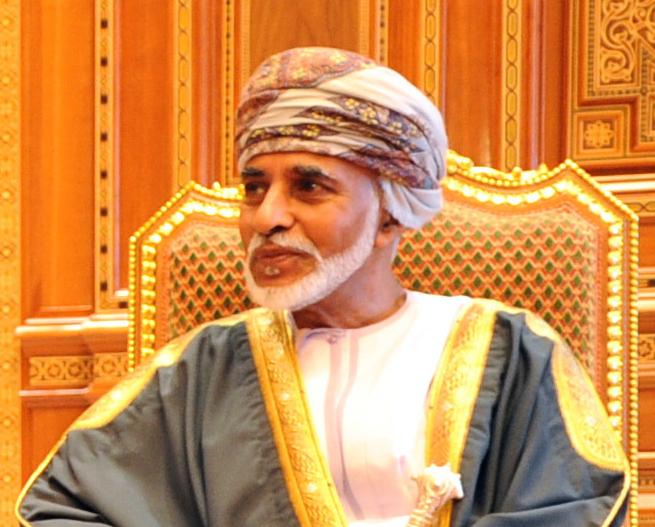
Sultan Qaboos bin Said of Oman


Photo credit: U.S. Department of State

When Sultan Qaboos bin Said of Oman died on January 10, 2020, at age 79 without an heir, a letter was opened that revealed his hand-picked successor. The transition of power to his cousin, Haitham bin Tariq, who has two sons and two daughters, was peaceful -- and so far, that peace has held. 


Sultan Qaboos lived as a homosexual, with elegant, somewhat effete young men (displaying Rolex watches and other luxury items) populating his palaces. He was also known to have a male English lover. Qaboos had been educated in England and even served in the British Army. Although everyone in the Middle East knew of his homosexual proclivities, the Sultan never came out.


With support from the British he seized power from his father in a 1970 coup to become an absolute monarch who ruled by royal decree. The press was muzzled, and all media was censored before publication or broadcast, so nothing of the sultan’s homosexual activity was ever revealed to the public. In Oman, homosexual acts were punishable by up to three years of imprisonment, and Qaboos did nothing to create a more progressive environment for gays. Even so, there is a dynamic underground gay scene in Oman, but the police turn a blind eye to it. So to this day, Turkey is the only predominantly Muslim country in the Middle East where homosexuality is not outlawed (no longer true - several alert readers have pointed this out -- see comment section). 


Yet Sultan Qaboos enjoyed a reputation as an “enlightened” despot. Quite naturally he received good press in England and at home, where even the “live” news broadcasts were pre-recorded for purposes of censorship. Not a single unflattering comment or photo was allowed to be made public.


The sultan presented an image of a Renaissance Man – he played the flute, built an opera house (above) and maintained a full symphony orchestra that included female musicians (although they wore hijabs); all 120 members are Omani nationals.


He was partial to the pipe organ and had a large German-built instrument installed in the opera house in 2011. One of the stops is labeled “Flûte Qaboos” in honor of his flute playing ability. 


Over the course of a 50-year reign, he ended Oman’s international isolation, raised standards of living, increased business development, abolished slavery, granted freedom of religion and quelled a rebellion. He paved roads, built an airport, schools and hospitals, established a telecommunications network and spread electrification throughout the country. These achievements are remarkable. For a brief three years (1976-79) Sultan Qaboos was married to his first cousin, who later remarried. Their union produced no heirs.

To celebrate the 30th anniversary of his rule, the sultan built this grand mosque, one of the largest in the Middle East.


Now that Sultan Qaboos is dead, there remains only one other Middle Eastern royal known to engage in homosexual activity, the bisexual Crown Prince Hamdan bin Mohammed al Maktum of neighboring Dubai. But that deserves a separate blog post. Stay tuned.

References:
San Cassimally
Wikipedia
Royal Foibles (blog)

Wednesday, March 18, 2020

George Platt Lynes


George Platt Lynes - self portrait 1940s


c. 1952

The American fashion and commercial photographer George Platt Lynes (1907-1955) discreetly produced a large body of homoerotic images that he kept for himself or distributed to a carefully selected circle of friends. For many years after his death, it was thought that he had destroyed all his prints and negatives of male nudes, but it turns out that most of them had found their way into the archives of the Kinsey Institute (Indiana), which now possesses the largest collection of male nudes by Lynes to be found anywhere. 


During the 1930s, Lynes was commissioned as a fashion photographer for magazines such as Vogue and Harper’s Bazaar. After relocating from NYC to Los Angeles, he became Hollywood’s acclaimed celebrity portraitist. During this time he was also pursuing a personal body of black and white photographs of male nudes and homoerotic images that he kept private, fearing they would harm his reputation and business in a homophobic society. While his earlier nudes depicted idealized youthful bodies, such as a young Yul Brynner, he moved towards a rougher and more sexualized aesthetic in his later work. As a pioneer in masculine erotic photography, George Platt Lynes also helped forge Dr. Alfred Kinsey’s research on homosexuality.


Bill Miller (1953) by George Platt Lynes

Lynes was born in 1907 in East Orange, New Jersey, but a life-changing event came with his relocation to Paris in 1925, a move meant to prepare him for college. While in Paris he forged friendships among the artistic elite and was never seen without his camera. Once again stateside, he opened a photographic studio in NYC and began a private series of photographs that interpreted characters and stories from Greek mythology, but it was portraiture that brought financial stability. Today he is best known for his portraits of artists such as W.H. Auden, Jean Cocteau, Colette, Aldous Huxley, Igor Stravinsky and Thomas Mann. After he moved to Hollywood in 1946, he photographed Katharine Hepburn, Rosalind Russell, Gloria Swanson, and Orson Welles. In 1948 he moved back to NYC, where he remained until his early death from lung cancer in 1955.


Gordon Hansen (1954)


Robert McVoy by George Platt Lynes 

Saturday, March 14, 2020

Dr. Richard Isay


Psychiatrist Richard Isay Fought
Mental Illness Label for Gays


Dr. Richard A. Isay (1934-2012) was a psychiatrist and gay-rights advocate who badgered the professional psychiatric community to declassify homosexuality as an illness. Dr. Isay (pronounced EYE-say) was a married father of two sons who did not accept that he was gay until he was forty years old. At the time of his death from cancer, he was married to Gordon Harrell, an artist twenty years his junior.

Isay, who was a professor at Weill Cornell Medical College and faculty member at Columbia University, also authored several books, among them “Commitment and Healing: Gay Men and the Need for Romantic Love” (2006), “Becoming Gay” (1997), and “Being Homosexual” (1989).

Along his path to changing the way the psychoanalytic profession viewed homosexuality, Isay was attacked by his peers. Troubled by his own sexuality, Isay underwent ten years of therapy, after which he accepted that he was homosexual. Although he remained closeted for a time, he assisted gay patients in accepting their sexual orientation, instead of promoting a “cure” by way of therapy. He published articles promoting homosexuality as normal, not an illness or defect of development.

When Isay acknowledged his homosexuality at professional gatherings, he was attacked by his colleagues, who stopped referring patients and suggested the he needed more therapy himself. Nevertheless, over the course of fifteen years Dr. Isay championed the premise that the medical field based its views on ideology, not evidence.

Even though the American Psychiatric Association stopped classifying homosexuality as a disease in 1973, many members of the American Psychoanalytic Association (the oldest professional group for analysts in the United States and one of the most influential) continued to regard it as an illness. In 1992 Isay threatened to sue that association, ultimately forcing them not to discriminate in training, hiring or promoting gay psychoanalysts. Isay’s stubbornness paid off. By 1997, in a major turnaround, the American Psychoanalytic Association became the first national mental health organization to support gay marriage.

During the course of his illustrious career Isay also served as vice president of the National Lesbian and Gay Health Association and as a member of the board of the Hetrick-Martin Institute for LGBT youth in Manhattan.


Steven Sampson, a patient who became a friend, wrote after Isay’s death, “I think Richard was sort of a ‘bridge’ person, providing a bridge between different worlds that don’t always communicate. He was married with children, yet he was gay and had a long-term committed relationship with a man, in an environment in which long-term relationships were rare.”

From Andy Humm for Gay City News: Tobias Picker, the composer and a patient of Isay’s, wrote in an e-mail, “Richard said that fear of death came from feeling unloved. He knew he was completely loved by his husband, Gordon, and his family, and it was easy to see that he felt that love utterly and completely. He knew he was much beloved by his patients too. Not long ago, he told me...that he had no fear of death –– that he never gave it a thought.” Picker added, “For those who didn’t know him, his writings leave behind a lasting legacy of love.” Both his sons said that Isay’s favorite literary figure was Ferdinand the Bull from the Munro Leaf children’s book, the gentle beast who preferred flowers to bullfights. Richard Isay, famous for the fights he took on and won, was himself a "gentle beast".

In addition to his sons and husband, at the time of his death Isay was survived by his former wife,  a brother, and four grandchildren, one of whom served as best man when Isay and Gordon Harrell were married in the living room of Isay’s son Josh. Dr. Isay is buried in Brooklyn’s Green-Wood Cemetery (below), along with other gay luminaries Leonard Bernstein, Fred Ebb (of Kander and Ebb) and Louis Moreau Gottschalk (see individual blog posts in sidebar).


Sources:
New York Times (Denise Grady)
Gay City News (Andy Humm)
Headline photograph: Ozier Muhammad (NYT)