Role models of greatness.

Here you will discover the back stories of kings, titans of industry, stellar athletes, giants of the entertainment field, scientists, politicians, artists and heroes – all of them gay or bisexual men. If their lives can serve as role models to young men who have been bullied or taught to think less of themselves for their sexual orientation, all the better. The sexual orientation of those featured here did not stand in the way of their achievements.
Showing posts with label Athlete. Show all posts

Tuesday, May 12, 2026

Orlando Cruz

Update to original post:

When Orlando Cruz retired from boxing in 2018, the World Boxing Organization (WBO) ranked him at #4 among featherweights. Also mentioned in this post is Robbie Rogers (soccer), who retired in 2017, and Jason Collins (basketball) who retired in 2014 (Collins died of brain cancer on May 12, 2026, at 47 years old).  


Original post on May 30, 2013:

What with all the recent attention given active professional team sports athletes Jason Collins (basketball) and Robbie Rogers (soccer), professional boxer Orlando Cruz (b. 1981) wants to remind everyone that he came out in 2012, before either Rogers or Collins.

Puerto Rico’s featherweight boxer Cruz has won two fights since coming out last year. As an amateur, he represented Puerto Rico at the 2000 Olympic Games in Australia. Cruz made his professional debut that same year against Alfredo Valdez in Puerto Rico. Cruz was undefeated for nine years, until he lost to Cornelius Lock by a technical knockout in 2009. Cruz is currently ranked at No. 4 among featherweights by the World Boxing Organization (WBO).

On October 4, 2012, Cruz became the first WBO boxer to come out as gay while still active professionally, stating that "I have and will always be a proud Puerto Rican. I have always been and always will be a proud gay man.”

Cruz revealed in his statement that he was tired of hiding who he really was.

"I don't want to hide any of my identities," he said. "I want people to look at me for the human being that I am. I am a professional sportsman who always brings his best to the ring. I want for people to continue to see me for my boxing skills, my character, my sportsmanship. But I also want kids who suffer from bullying to know that you can be whoever you want to be in life, including a professional boxer, that anything is possible, and that who you are or whom you love should not be an impediment to achieving anything in life.”

Cruz said he met with psychologists and others before making the announcement, adding he had the full support of his family, trainer and manager. He praised his mother and sister for their unconditional love and said his father has always backed him. At the time Cruz came out, no active professional team sports player had yet come out as gay. Robbie Rogers (b. 1987) and Jason Collins (1978-2026) have since taken care of that deficiency.


Note: U.S. Virgin Islander Emile Griffith, who told The New York Times in 2005 that he struggled with his sexuality, admitted that he had sexual relations with both men and women. His comments, however, came decades after he ended his 18-year career as a pro boxer. Griffith (1938-2013) was well-known for his 1962 fight against Cuban boxer Benny Paret, who taunted Griffith with gay slurs before their bout (during the weigh-in at Madison Square Garden NYC, Paret patted Griffith’s behind and called him a maricon – Spanish for “faggot”). Griffith knocked him out live on national television, and Paret, who never regained consciousness, died in a hospital 10 days later. Griffith, who retired in 1977, was also a former middleweight champion and a Hall of Famer.

Monday, August 19, 2024

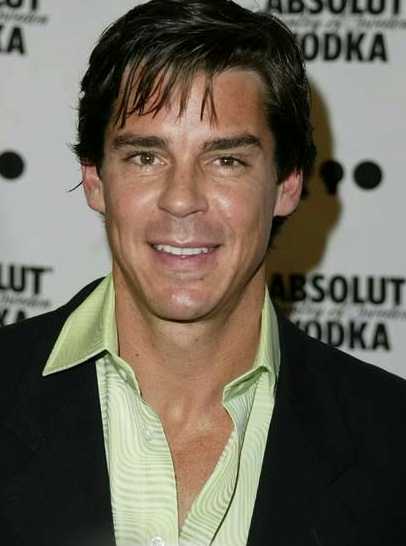
Billy Bean

Gay Major League Baseball Player

UPDATE: Billy Bean succumbed to leukemia on August 6, 2024 at age 60.

Original post from August, 2011: Forty-six year old Billy Bean was a high-scoring outfielder in a baseball career that lasted from 1987-1995. He played for the Detroit Tigers, Los Angeles Dodgers and San Diego Padres. When he joined the Detroit Tigers in 1987, he tied a MLB record with four hits in his first major league game.

He acknowledged that he was gay in a front page story in the New York Times in 1999. Bean went on to write a book, “Going the Other Way: Lessons from a life in and out of Major League Baseball.” Bean is only the second former major league player to reveal his homosexuality; the late Los Angeles Dodger and Oakland Athletic Glenn Burke is the other.

When Bean left behind his life as a professional baseball player, he let go of a dream he had pursued since childhood. But his life as a closeted gay man created so much stress that he chose to give up his career. As a closeted player (not even his agent knew he was gay), he had divorced his wife and secretly moved in with his lover, Sam. When Sam died of AIDS, Bean was so frightened of his secret being revealed that he didn't attend his lover's funeral, a tragic decision that ultimately led to his coming out. He became the center of attention of a gay and lesbian community looking for ways to break down barriers of homophobia in sports. Bean, however, was blunt about how strong that barrier remains – he doesn't foresee any professional baseball player coming out while continuing to play.


He says of his book, "This is not a sad story about a victim of homophobia, or baseball mistreating me. It's about what it's like to live in the closet and try to realize a dream under those restrictions." Throughout the book Bean also reveals his love of the sport, while exploring some of the darker side of baseball, especially the humiliation of being sent to the minors. It is a tale of self denial turned around into self acceptance.

Bean now has a successful career in real estate in Miami, Florida. He is also a board member of the Gay and Lesbian Athletics Foundation.

A tip from a blog reader: Bean was one of the panelists on GSN's 2006 revival of "I've Got A Secret", where the open secret was that all four panelists were gay. He later became a MLB diversity executive.
 
 
Going the Other Way review by Brad Ausmus (all-star catcher, Houston Astros):

"Millions of American boys dream of playing Major League Baseball. Just when Billy Bean's dream was coming true, self-realization and tragedy came crashing down on him. Through it all, he had a remarkable will and the mental fortitude to withstand both the nightly pressures of playing in front of 35,000 fans and living a secret 'forbidden' life. In the end, this gut-wrenching story is an amazing triumph of character over consequences. Billy Bean is an inspiration."

280 pages. Da Capo Press (2003).
http://www.amazon.com/gp/product/1569244863/ref=kinw_rke_rti_1

Wednesday, August 7, 2024

Carl Hester to compete in 7th Olympic Games

UPDATE: Carl just won a bronze medal in Paris for the Great Britain 2024 dressage team

Dressage master Carl Hester is headed to his SEVENTH Olympics competition in Paris later this month. As such, he will be among the oldest athletes competing (Hester turned 57 a few days ago). When he was on the Great Britain dressage team that took gold at the 2012 Olympics in London, he was the sole "out" gay athlete representing GB. The home crowd was best pleased. Team Great Britain had never before won a gold medal in dressage. He was subsequently named a Member of the Most Excellent Order of the British Empire (MBE).

When Carl Hester (b. 1967 in Cambridgeshire, England) decided to take up the sport of dressage in the early 1980s, he was already a natural. Only 18 months after he began training for the sport, Hester won the National Young Rider Championship (1985) as a teenager. He quickly landed on the British Young Rider team in 1988, and he hasn’t looked back.

At the 2004 Summer Olympic Games in Athens, Carl and Escapado (his horse) placed higher than any other Briton – the same thing at the 2005 European Championships, where the pair ended up in 6th place. On the run up to the 2007 European Championships, Carl was injured and had to back out at the last minute. Bad luck continued into 2008. His two promising horses for Beijing’s Olympic Games, Lecantos and Dolendo, both suffered injuries, so he missed competing.


Hester was soon given an opportunity to ride a new horse, Liebling, and the two formed a quick, strong bond and won an international grand prix. A host of other great results would lead the British team to select Carl for the European Dressage Championships in 2009. Carl’s riding helped Team GB win a silver medal in that event, and he would repeat those results a year later with another silver medal.

The 2012 Olympic dressage gold medal was won with his champion horse "Uthopia." Hester's GB dressage team also won a silver Olympic medal at Rio in 2016 and a bronze at Tokyo 2021. Currently there are plans to make a biopic film of his life story, produced by UK-based filmmakers Drew Curtis and Richard Conway.

Hester will mount "Fame" (photo below), a horse with whom he first competed last year, for the Paris Olympics dressage team events to be held at the Palace of Versailles July 27-August 6, 2024.


Saturday, April 15, 2023

Bill Tilden, Tennis Champion


In 1920 Bill Tilden, who made no effort to hide his homosexuality, won the men’s singles title at Wimbledon. He was the first American to compete at Wimbledon and went on to win two more Wimbledon titles, in addition to seven U.S. championships. As well, he led U.S. teams to seven Davis Cup victories. From 1920 to 1934, Tilden was generally considered the world's greatest tennis player. In 1925, Tilden won an astonishing 57 matches in a row. Although Tilden lost part of his finger in an accident in 1922, he simply modified his grip and continued to play at the same level as before the injury. He won the moniker “Big Bill Tilden,” since he was tall and had a vast reach. His extraordinary serve was so powerful it was often compared to a cannonball.

A 1950 survey of sportswriters named Tilden the greatest tennis player of the half-century. Historically he is generally considered above the caliber of later champions such as Björn Borg, Pete Sampras and Roger Federer.

There was also an aura of scandal around Tilden, because of his sexual orientation. In Vladimir Nabokov’s novel “Lolita,’ Tilden is depicted as a has-been tennis champion with “a harem of ball boys,” whom Humbert Humbert hires to coach Lolita, knowing that the coach will not try to seduce her, due to his homosexuality. Nabokov told editor Alfred Appel that the novel’s anonymous tennis coach was actually a real person who had won three Wimbledon championships, was born in 1893, and died in 1953. Tilden is the only person who fits this description. The name of Nabokov's character is "Ned Litam", which is “Ma Tilden” spelled backwards.

Tilden incurred two scandalous arrests for sexual misbehavior with teenage boys in the late 1940s, and his career suffered because of it. He began traveling with hand-picked teenaged ball boys, and many clubs would not allow him on the courts. However, in 1945 Tilden and long-time doubles partner Vinnie Richards won the professional doubles championship; Tilden was 52 years old at the time.

Tilden was a devout believer in sportsmanship above all other aspects of the game, including the final score; he would readily (and dramatically) cede points to his opponent if he thought the umpire had miscalled a shot in Tilden's favor. He still remains the only known professional tennis player (perhaps the only professional at any sport) to have refunded money to a promoter when the gate was not as good as it should have been and it appeared the promoter was going to lose money.

He loved the glamour of movie stars. Tilden moved to Hollywood and coached Greta Garbo, Katharine Hepburn, and Tallulah Bankhead. He also became a good friend of Charlie Chaplin. Tilden played at Chaplin’s tennis parties, where he coached Errol Flynn, Joseph Cotten, Montgomery Clift, Spencer Tracy, and Olivia deHavilland.

He fashioned himself a master of genres outside the world of sports, never to successful ends. He wrote short stories and novels about misunderstood but sportsman-like tennis players, and dreamed of being a star on Broadway and in Hollywood. He appeared on stage as well as off, as a producer. Much of his vast earnings were invested in these pursuits, with failure the invariable result. He was also a contract bridge champ, musicologist and playwright. He was once quoted as saying. "If I had to choose between music and tennis, I'd choose music."

In 1953 he was preparing to leave Los Angeles for the U.S. Professional Championship tournament in Cleveland, Ohio, when he died of a stroke at age 60. He was buried at Ivy Hill Cemetery in his home town of Philadelphia, where he had been born into wealth and privilege. At the time of his death Tilden was living in a rented apartment in Hollywood with $288 in the bank, a tragic end to a great life. Tilden was inducted into the International Tennis Hall of Fame in Newport, Rhode Island, in 1959.

In 2004, a play titled “Big Bill,” based on the life of Bill Tilden, played at Lincoln Center in NYC. The playwright was acclaimed dramatist A. R. Gurney. Frank Deford's biography, "Big Bill Tilden: the Triumphs and the Tragedy" has been optioned for a film.


Fashion note: During the early part of the 20th century male tennis players dressed virtually indistinguishably from cricket players. Men wore cuffed white flannel trousers and white shirts, sometimes with v-neck or cable-knit sweaters to add an element of style. Bill Tilden is generally regarded as having been the first male tennis fashion icon, transforming the image of men’s tennis from a sport played by wealthy, leisured young men unable to handle the physical demands of team sports, into a man’s game played by the toughest athletes. Tilden’s enormous fame led many to emulate his style of dress, which included long shirts rolled up to the elbows, cuffed trousers and a selection of elegant sweaters.

Saturday, February 15, 2020

Dave Kopay - Jerry Smith: NFL team love affair

Washington Redskins: NFL’s Gayest Team?

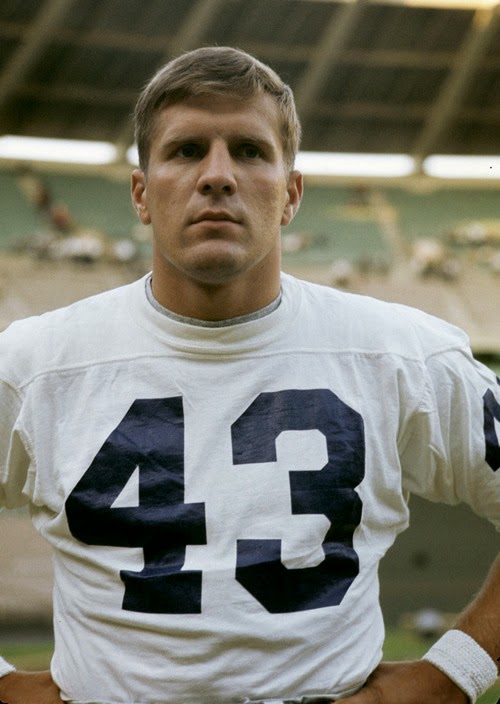
At least four players and a General Manager of the Washington Redskins football team were known to be gay. The players were Dave Kopay (left), Jerry Smith, Wade Davis and Roy Simmons, and the  GM was David Slattery. Not to mention team publicist Joe Blair.

While a running back for the Washington Redskins, Dave Kopay (b. 1942) had a relationship with teammate Jerry Smith, a star tight end for the team from 1965-1977. In 1975, three years after his career in football had ended, Kopay gave an interview to the Washington Star (newspaper) in which he declared his homosexuality. He is believed to be the first professional athlete to do so. It was while playing for the Redskins under legendary coach Vince Lombardi that Kopay and Smith had their affair.

In 1977 he wrote his autobiography, “The David Kopay Story: An Extraordinary Self-Revelation,” currently in its 5th printing. The book remains a perennial favorite with people coming to grips with their sexual identities.

Kopay told the cable sports network ESPN about his relationship with Jerry Smith, calling it his “first real coming-out experience.” Although Smith died of complications from AIDS in 1987 at age forty-three, he never publicly acknowledged his homosexuality. Smith caught 421 passes and had 60 touchdowns during his career, astonishing for a tight end at the time. Upon his retirement, Smith held the NFL record for most career touchdowns by a tight end. According to Jim Buzinski (Outsports), Smith's absence from the Pro Football Hall of Fame is a disgrace. In addition to Smith and Kopay, the Redskins 1969 training camp included gay running back Ray McDonald (cut from the roster prior to the start of the season). McDonald also died of complications from AIDS.

Kopay's teammate and lover Jerry Smith:


At the Gay Games VII in Chicago (July 2006), Kopay was a featured announcer in the opening ceremonies. Currently active as a motivational speaker, Kopay announced in September 2007 that he would be leaving $1 million as an endowment to the University of Washington Q Center, a resource and support center for gay, lesbian, bisexual and transgender students and faculty. In early 2008 Kopay left the Los Angeles area to relocate to Seattle, where he still receives hundreds of letters from fans of his book who received understanding, support and inspiration from his life story.

In 1992, Roy Simmons, who had been a linebacker for the Washington Redskins and New York Giants in the 1980s, came out on the national television talk show, “Donahue.” In 2003, on World AIDS Day, he revealed that he had been diagnosed with AIDS in 1997. His book that tells his story about being in the closet while playing with the NFL is titled "Out of Bounds."

In 1993 David Slattery, general manager of the Washington Redskins in the early 1970s, came out as homosexual, long after he had left the sport.

Wade Davis (below) was a defensive back for the Redskins for the 2003 season. He announced he was gay when he participated in the Gay Lesbian Straight Education Network's "Changing The Game" program, which is designed to fight against homophobia in K thru 12 athletics by starting a dialogue about the issue.


Friday, October 20, 2017

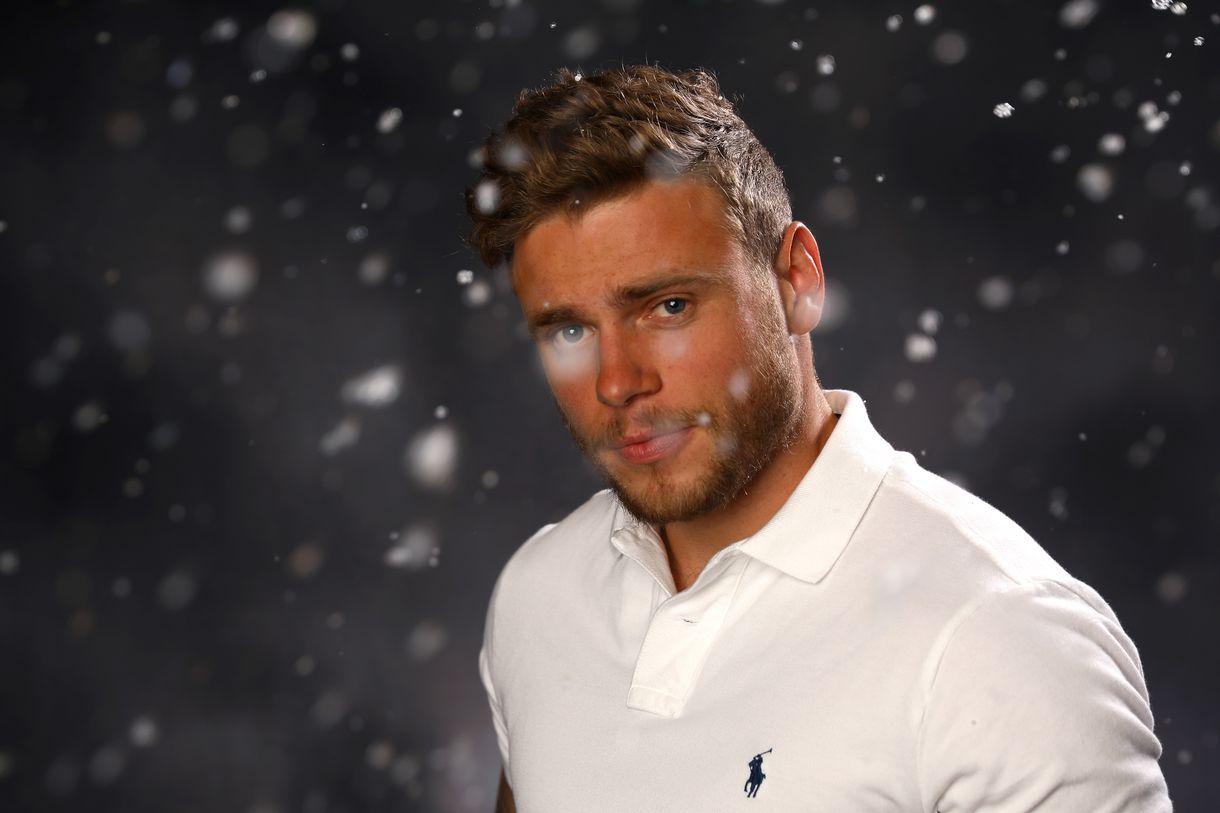
Gus Kenworthy


Closeted gay athletes used to say that they stayed in the closet because they would lose lucrative sponsors. Well, Olympic skier Gus Kenworthy has turned that excuse on its head. 


An excerpt from Sports Business Journal:

...As a good-looking, outgoing silver medalist who helped rescue stray dogs in Sochi, Kenworthy would have had plenty of calls from sponsors regardless. But when he told ESPN Magazine in 2015 he’s gay, he added the factor that makes all the difference to marketers: A distinctive personal story that highlights a diversity theme.

He’s already signed with Visa, Toyota, Ralph Lauren (photo above), Deloitte and 24 Hour Fitness, and his agent...says at least two more Olympic deals are coming. Those are on top of his long-term relationships with Monster Energy, Atomic skis and Smith goggles. He’ll be featured in Visa’s marketing and extensively profiled on NBC broadcasts. Olympic insiders say nearly every USOC or IOC sponsor inquired about his availability.

“It’s absolutely true –  I think I’m more marketable now as an out athlete,” Kenworthy said. “Every brand is looking for diversity...more so than it’s ever been.”

From Jim Buzinski at Outsports:
...(Kenworthy) is aware of the power of being a brand spokesman because he’s gay (“I think that’s so friggin’ cool,” he said). And his story has been embraced by the U.S. Ski and Snowboard Assn., which asked him to do a Facebook live video on Wednesday (October 11) for National Coming Out Day*.  

Background: In October, 2015, Kenworthy became the first action-sports star to come out. He had won a silver medal in men’s freestyle skiing at the 2014 Winter Olympics in Sochi, Russia, and he’s training for the 2018 Winter Olympics in South Korea next February.

*Observed annually since 1988. October 11 was chosen because that was the anniversary of the 1987 National March on Washington for Lesbian and Gay Rights. 


Photo from the ESPN Body Issue (Summer 2017):


Excerpts from a Time Magazine interview July 5, 2017:

Time: If you are invited to the White House after the Olympics, would you attend?
Gus: I won’t go. Yeah, I have no interest in going and faking support. I’m proud to be competing for the U.S. I'm proud to be an American. But I don’t want to show any support for that cabinet. I don’t want to go shake his hand.

Time: So who is your celebrity crush?
Gus: It's always been Jake Gyllenhaal. I mean, this list can go on. I love Henry Cavill too. I went to lunch the other day with reps from Polo Ralph Lauren, and Jake Gyllenhaal was two tables over. I took a photo of him from a distance. I zoomed in, shaky hand.


Your blogger's original post on Mr. Kenworthy (Oct. 24, 2015):

Olympic skier reveals that he is gay 


Olympic champion freestyle skier Gus Kenworthy (b. 1991) revealed earlier this week that he is gay. He became the first action sports figure to come out as gay. The British-born American, who now lives in Colorado and competes in slopestyle and halfpipe, won the silver medal in Men's freestyle skiing at the 2014 Winter Olympics in Sochi, Russia.

“I feel just amazing to have it out there,” Kenworthy said in an interview. “It feels like a huge weight’s been taken off of my shoulders. I’ve been completely floored by the response that I’ve gotten. Everyone’s been so supportive and so kind with what they’ve said.” Gus, who says he has known he was gay since he was five years old, appeared on the cover of this week's ESPN magazine, the venue he chose for his coming out story.

 Peter Hapak for ESPN


Kenworthy gained international media attention as a result of his efforts to rescue five stray dogs that hung around the media center of the Olympic village. He stayed behind for more than a month to save the family of dogs. Kenworthy arranged for their eventual adoption, calling further attention to the problematic rise of the stray dog population in Sochi, which grew significantly during the Olympics.


Tuesday, November 18, 2014

Dave Kopay


Former NFL player Dave Kopay


In a 2008 column that appeared in the University of Washington alumni newsletter, Jon Naito wrote a feature on Dave Kopay (b. 1942), a veteran National Football League player who had been an All-American running back at the University of Washington in the early 1960s. Kopay, who had relocated to Seattle after spending decades in the West Hollywood area of Los Angeles, had recently announced his intention to leave a $1 million endowment to the university’s Q Center, a resource and support center for gay, lesbian, bisexual and transgender students and faculty. The value of this bequest amounts to half of Kopay’s estate.

While a running back for the Washington Redskins (1969-70), Dave Kopay had a relationship with teammate Jerry Smith, a star tight end for the team. In 1975, three years after his career in football had ended, Kopay gave an interview to the Washington Star newspaper in which he declared his homosexuality. He is believed to have been the first professional athlete to do so. It was while playing for the Washington Redskins under legendary coach Vince Lombardi that Kopay and Smith had their affair. Subsequently, Kopay disclosed that many of their Redskins teammates knew about their relationship. In a January 1998 Kopay profile in GQ magazine, David Kamp wrote:

...You had to comport yourself a certain way as a gay man on the Washington Redskins. When I ask Kopay how well-known it was among the 'Skins that he and Smith were gay, he takes me over to the 1970 team portrait that hangs on his foyer wall. "Walter Rock—he knew. Vince Promuto—he knew. Len Hauss—he knew. Pat Richter knew; he's now the athletic director of the University of Wisconsin. I'm sure Brig Owens knew—he was Jerry's best friend on the team. Larry Brown knew. Ray Schoenke knew. They knew and had ways of making me know they knew. I was always being kidded about it by Walter Rock: 'Where are you and Jerry going tonight? Anyplace we can go?' "...

In 1977 he wrote his autobiography, “The David Kopay Story: An Extraordinary Self-Revelation,” currently in its 5th printing. To this day the book remains a perennial favorite with people coming to grips with their sexual identities.

Kopay told the cable sports network ESPN about his relationship with Jerry Smith, calling it his “first real coming-out experience.” Although Smith died of complications from AIDS in 1987 at age forty-three, Jerry never publicly acknowledged his homosexuality.


Above: Artful image of Kopay by noted gay photographer George Dureau*, who died of Alzheimer's disease earlier this year.


*See separate post on George Dureau in sidebar

At the Gay Games VII in Chicago (July 2006), Kopay was a featured announcer in the opening ceremonies. Currently active as a motivational speaker, Kopay still receives hundreds of letters from fans of his book who received understanding, support and inspiration from his life story.

Kopay had grown up in a strict Catholic family, serving as an altar boy. He was tormented with guilt over his sexual attraction toward men, which drove him to enroll at a junior seminary while in his teens, hoping to “cure” himself by becoming a priest. Instead, he found himself intensely attracted to his fellow seminarians. He transferred to a Catholic high school, where he became a football player. At the University of Washington, where his brother was also on the football team, Kopay became a star running back, culminating in a 9-season professional career in the NFL.

While a member of the Theta Chi fraternity at the University of Washington, Kopay had a clandestine relationship with a fraternity brother. The two slept together on the porch of the frat house, usually after dropping off their female “dates.” His fear and insecurities led to major bouts of depression, and it would take more than a decade for Kopay to begin to confront his big secret.

In the meantime, Kopay entered into a marriage that ended in divorce.  He took measures to mislead others about his sexual orientation, feigning interest in women. Because he wasn’t like the stereotypical gay man, he did not think of himself as a homosexual, and the conflicts and personal torment continued.


Finally, after coming out to a reporter for a Washington, DC, newspaper three years after his professional career ended, he wrote his landmark autobiography, The Dave Kopay Story, which subsequently led to many opportunities as a public speaker and gay rights activist. Unfortunately, it also ended his hopes for a career as a coach. Kopay feels that he was effectively blackballed from the sport of football.

After reconnecting with his alma mater, however, Kopay has been given the recognition and support he had long sought. During halftime of a Huskies' game, he was honored by being named a “Husky Legend.” The crowd roared as he crossed the field, and the moment resonated with him. He was finally one of them.

At the time he wrote the Kopay profile for the UW alumni newsletter, Jon Naito was a reporter for the Seattle Post-Intelligencer newspaper, where he worked on the city desk. The link to his alumni newsletter feature can be found here:

http://www.washington.edu/alumni/columns/dec08/kopay.html

1 com

Monday, May 12, 2014

Michael Sam

Michael Sam became the first openly gay player drafted by the National Football League when he was selected by the St. Louis Rams in the seventh round of draft picks over the weekend.

The White House issued this statement: "The President congratulates Michael Sam, the Rams and the NFL for taking an important step forward today in our nation's journey. From the playing field to the corporate boardroom, LGBT Americans prove every day that you should be judged by what you do and not who you are."

After Sam was shown on national television kissing his boyfriend in response to the good news, there was an immediate backlash. Although some compared Sam’s kissing his boyfriend to other athletes kissing their wives or girlfriends in similar situations, several prominent players tweeted their disgust, including Miami Dolphins safety Don Jones, who was summarily fined by his team and barred from team activities until he finishes "training for his recent comments made on social media."

Of course, Sam has only been drafted by a team; it is important to remember that he has not yet gained a place on a team roster. Enormous pressures from various factions await him.

On a brighter note, there’s this tweet:

"NFL guys get drafted. Kiss girlfriends. @MikeSamFootball kissed his boyfriend. Don't like?..that's a "you" problem," ESPN anchor Stuart Scott tweeted. "Congrats Mike!"

Tuesday, December 3, 2013

Tom Daley

Nineteen-year-old British diver Tom Daley (born May 21, 1994) won the bronze medal for Great Britain in the individual competition at the 2012 Summer Olympic Games held in London. Shortly thereafter he took a role in a British television diving reality TV show, Splash! He made his debut in the show's premiere as a mentor to the celebrity competitors taking part. The show was a ratings success, with an average audience of 5.6 million viewers, and has been renewed for 2014.

On December 2, 2013, Daley released a YouTube video announcing that he has been in a personal relationship with another man since spring of this year. He said, "I still fancy girls, but at the moment I've never been happier.” The video reveals that, while his mother and close friends have been supportive after he revealed his bisexuality, some members of his extended family reacted with “mixed” results.

The man he is dating is Oscar-winning gay rights activist Dustin Lance Black (see sidebar), who is twenty years older than Daley. The two celebrities met at the Kids' Choice Awards in Los Angeles last March and hit it off straight away. Since then Tom has been joining Dustin on trips abroad to Paris, Barcelona and Miami. Dustin’s work as a high-profile gay activist gave Tom the courage to come out by posting his YouTube video yesterday. Apparently the couple think nothing of their age difference and don't care what anyone else might think of it.

Daley has won medals in international diving competitions since 2007. He was just twelve years old when he won a silver medal in synchronized diving at the Australian Youth Olympic Festival, and awards have piled up ever since. However, his participation in competitive diving during most of 2013 has been restricted because of elbow and triceps injuries. Currently Mr. Daley is training for the 2016 Summer Olympic Games that will be held in Rio de Janeiro, Brazil.


Wednesday, November 13, 2013

Darren Young


In a TMZ video interview released on August 15, 2013, WWE wrestler Darren Young (b. 1983) publicly discussed his homosexuality. Thus Young became the first WWE star wrestler ever to come out while still signed to a major promotion. WWE (World Wrestling Entertainment) wrestlers Pat Patterson, Chris Kanyon & Orlando Jordan had come out as gay or bisexual after leaving the company or retiring. Darren Young (real name Fredrick Douglas Rosser III) has been in a relationship with his partner Nick Villa for more than two years. The couple resides in Miami.

Nick Villa (left) with “Fred” Rosser, aka Darren Young:


Photo by Jeffery Salter


Later that day WWE released a statement in support of Rosser for being open about his sexuality, and various fellow wrestlers tweeted their support for him. Young also discussed having to overcome his childhood stuttering issues. To the wrestler’s astonishment and relief, he was greeted with open arms by not only the organization's management and fans, but also by his colleagues in the ring.

"They all embraced me, and that was just shocking to me. I truly love them," said Rosser. "It was such a relief. I'm not hiding anymore, and I'm living the dream."

Fred and his partner Nick later appeared as talk show guests on Ellen:


Saturday, July 6, 2013

Brian Sims (update)

On June 27, out and proud Pennsylvania Rep. Brian Sims (182nd Dist.) joined Rep. Steve McCarter (D-154th Dist.) In stating that they would introduce a bill to allow Pennsylvania to join the 13 states and Washington, DC, that now have marriage equality (at present Pennsylvania and New Jersey are the only northeastern states that do not allow gay marriage). Anti-gay legislator Rep. Daryl Metcalfe sought to silence Sims on the House floor when Sims tried to speak about the Supreme Court decision on DOMA and Prop. 8. Metcalfe said Sims was acting in “open rebellion against what the word of God has said, what God has said, and just open rebellion against God’s law*.” Sims states that the bipartisan support he saw after that incident was encouraging. With the legislature now in recess, Sims and McCarter plan to introduced the marriage equality bill in early fall.

Three things you don’t know about Brian Sims:

“I play the harmonica...I can walk on my hands, and I still hold Pennsylvania’s bench-press record. I pressed 500 pounds in college and every year I get a call from a school saying that somebody’s going to break my record, but so far they’ve all failed.”

*Note from your blogger: While I support Mr. Metcalfe’s right to his religious beliefs and opinions, shouldn’t this guy be at least familiar with the U.S. Constitution and its intentional separation of church and state in the First Amendment? As authors of the constitution, both James Madison and Thomas Jefferson wrote and spoke of the “total separation between church and state,” and their writings were used in the first legal test cases. As far back as 1797, the U.S. Senate ratified a treaty with Tripoli that stated in Article 11:

“As the Government of the United States of America is not, in any sense, founded on the Christian religion; as it has in itself no character of enmity against the laws, religion, or tranquillity, of Mussulmen (ed.: Muslims); and, as the said States never entered into any war, or act of hostility against any Mahometan (ed.: Muslim) nation, it is declared by the parties, that no pretext arising from religious opinions, shall ever produce an interruption of the harmony existing between the two countries.”

To this day I keep this quote stored on my cell phone, and I have cited it many times when conversing with ignorant right-wingers. I just ask if they are aware of the language of our nation's Treaty with Tripoli of 1797, then I whip out my phone and read it. Shuts them up every time. Just a suggestion.

It was not always so. Myself a native Virginian, I know from studying history that the official church of the State of Virginia was the Anglican Church, to which tithes had to be paid during the 17th and 18th centuries. Presbyterians, Baptists and so forth were allowed to gather for worship, so long as they continued to pay tithes in support of the Anglican Church. These tithes were suspended in 1776 and never restored, and today, of course, Virginia has no state religion.

That said, legislative and religious bodies continue to react to one another. Although I live in Virginia along the shores of the Potomac, I can see the great mass of National Cathedral from Lynn Street upon exiting my building’s parking lot. Situated high atop Mount St. Alban, the cathedral pealed its bells for an hour beginning at noon on June 26, celebrating the Supreme Court’s decisions on DOMA and Prop. 8. Take THAT, Rep. Metcalfe.

My original blog post about footballer turned lawyer turned activist turned politician Brian Sims can be found here:

http://gayinfluence.blogspot.com/2013/01/brian-sims.html

Saturday, June 15, 2013

Emile Griffith

Champion” is a jazz opera about bisexual boxer Emile Griffith, an immigrant from St. Thomas (Virgin Islands), who landed 17 punches in seven seconds on Cuban boxer Benny "The Kid" Paret in 1962, resulting in not only a knockout, but also a coma from which Paret never recovered. He died ten days later. The match, held at NYC’s Madison Square Garden, was televised nationally by the ABC network. Before the fight Paret had taunted Griffith with gay slurs, calling him a “maricón” (faggot) at the weigh-in.

The world premiere of this opera takes place tonight at the Opera Theatre of Saint Louis, and five more performances will be offered through Sunday, June 30. Arthur Woodley plays the older Emile Griffith, while Aubrey Allicock (photo at top of this post and below) will portray the younger Griffith. Famed mezzo-soprano Denyce Graves is cast as Emelda Griffith, Emile’s mother. Direction is by James Robinson. The opera presents different episodes of Griffith’s life, each separated by the bell sounding a new round.

Baritone Aubrey Allicock (b. 1983), portrays Emile Griffith.

With music by jazz trumpeter, bandleader and composer Terence Blanchard (b. 1962, the very year of this fateful boxing match) and libretto by Pulitzer Prize-winning playwright Michael Cristofer, “Champion” is inspired by the true event of Griffith’s meeting with the son of Benny Paret forty years later. Paret’s son was two years old at the time of his father’s death. Flooded by memories of his career, his checkered personal life, and a later attack that exposed his homosexual activity*, the character of Emile explores his finding himself in the face of his greatest tragedy. Paret’s son is expected to attend the premiere performance, but Griffith himself, now 75 years old, is not well enough to attend.

*In 1992 Griffith was viciously beaten by a gang upon exiting a gay bar in NYC’s Port Authority Bus Terminal vicinity. He was hospitalized for four months as a result of his massive injuries. In a 2005 interview with Sports Illustrated magazine, Griffith discussed his struggle with his sexual attraction to both men and women. Ring of Fire: The Emile Griffith Story, a documentary about the life of Emile Griffith, was released in 2005.

"I kill a man," Griffith said, "and most people understand and forgive me. I love a man, and to so many people this is an unforgivable sin." Later in his life, Griffith began to suffer from dementia, and today he lives in a New York nursing home, requiring full-time medical attention.

"My father loved opera," says jazz composer Terence Blanchard, a five-time Grammy winner. "He was a baritone who studied opera, so it was impossible not to feel an emotional connection to him in writing Champion. I was drawn to tell Emile's story through music from the moment I first heard of his incredible journey. I knew there was no other way to tell this story but through the unique power of opera." Blanchard took on the project to honor his father, who was unable to realize his dream of becoming an opera singer in an era when opera companies did not hire black male singers.

Said librettist Cristofer, "Champion is the story of a man struggling to make peace with himself and to find his place in the world as a fighter and a gay man. It's the story of courage in the face of sexual oppression, of love in the face of hate, of grace in the face of physical and mental decline. For me, Emile's story not only asks the question of what it means to be a man. It asks what it means to be a human being."

Victor Ryan Robertson as Benny “The Kid” Paret (boxing gloves, left background), Aubrey Allicock as boxer Emile Griffith (center) and Denyce Graves as his mother Emelda (right).


Sunday, June 9, 2013

Hudson Taylor

It's rare that I feature a straight man on this blog, but today I make such an exception. Hudson Taylor (b. 1987) is a Columbia University wrestling coach, LGBT activist, and Founding Director of Athlete Ally. Although he is straight  (married to Lia Alexandra Mandaglio), his actions have had an enormous influence on LGBT persons, particularly athletes.

Taylor was an NCAA All-American wrestler before graduating and becoming a coach at Columbia University (NYC). He also secured the most pins and the most wins in the history of collegiate wrestling at the University of Maryland, and is ranked among the top five pinners in NCAA wrestling history. As well, he holds several hall-of-fame records.

Taylor is descended from a long line of Christian missionaries, including James Hudson Taylor, one of the first Christians to attempt to evangelize China. The Christianity of Taylor's family instilled in him a "strong sense of inclusion over exclusion," unlike many other Christian families who advocate homophobic policies and intolerance.

An athlete all his life, Taylor experienced denigration in high school and college sports, but befriended many gay people while majoring in Interactive Performance Art at the University of Maryland. When he wore an equality sticker from the Human Rights Campaign on his wrestling headgear, he faced backlash from his peers, but gained media attention. When he blogged about experiencing homophobia in collegiate sports, he received hundreds of emails from closeted athletes.

This experience inspired him to found the non-profit organization Athlete Ally, with the mission of "educating, encouraging and empowering straight athlete allies to combat homophobia and transphobia in sports." Athlete Ally provides social advocacy campaigns, on-campus training and practical tools, including resources to locate and learn about allied athletes, coaches, teams, athletic clubs and sports-based advocacy projects around the country.

Since January, 2011 (founding date of Athlete Ally), more than 13,000 people have signed the Athlete Ally Pledge. Ambassadors for this organization include Chris Kluwe (Minnesota Vikings), Brendon Ayanbadejo (Baltimore Ravens), Connor Barwin (Philadelphia Eagles), D’Qwell Jackson and Eric Barton (both of the Cleveland Browns), Donte Stallworth (New England Patriots) and Scott Fujita (New Orleans Saints). 23-year-old Kenneth Faried (Denver Nuggets), raised by a lesbian couple in Newark, NJ, was the first NBA player to join. Just a month ago, high profile tennis player Andy Roddick added his endorsement. Board members include former New York Rangers hockey player Sean Avery (!), former NFL player Dave Kopay (see blog entry in sidebar), sportscaster Dave Haber and Minnesota United Football Club president Nick Rogers.

Details at www.athleteally.com

"For me and my generation, LGBT rights is a pressing issue," says Taylor. "I believe that whatever history I'm a part of, I'm responsible for it. If I feel something is unjust or unequal, I feel a responsibility to do something about it."

As Executive Director of Athlete Ally, a public speaker and recurring blogger for the Huffington Post, he continues to spread his message of equality and inclusion. In 2010, Taylor was named by The Advocate as one of the “Top 150 Reasons to Have Gay Pride". In 2011 he received the PFLAG Straight for Equality Award and was named "Greatest Person of the Day" on April 8 by the Huffington Post. He was later honored by Buick and the NCAA alongside as a feature story of the Buick Human Highlight Reel.

His work is now featured in the permanent Miller Family Youth Exhibition at the Illinois Holocaust Museum and Education Center, which aims to empower young persons to stand as leaders against discrimination. In April 2012, Hudson Taylor was named University of Maryland Alumnus of the Year for the school of Undergraduate Studies for his work as an LGBT rights activist.

Hats off to one of our most significant advocates, gentlemen.


Thursday, June 6, 2013

Glenn Burke


Glenn Burke (1952-1995) was a major league baseball player perhaps best known today as the man who invented the “high five*.” But to gay athletes he left a legacy far more important than a hand gesture. Burke was, and remains, the first and only MLB player out to his teammates and team owners during his professional career (1976-1979). He was also the first American professional team sports player to acknowledge his homosexuality publicly during his pro career (sorry, Jason Collins).

*During a 1977 Dodgers game, Burke ran out onto the field to congratulate teammate Dusty Baker on hitting his 30th home run, raising his open palm into the air. Baker slapped Burke’s hand with his own open palm, and the rest is history. After retiring from baseball, Burke used the “high five” with other homosexual residents of the Castro district of San Francisco, where it became a gesture of gay pride and identification.

A California native, Burke, an African-American, played for both the Los Angeles Dodgers and the Oakland As. He made no secret of his sexual orientation to the Dodgers front office, his teammates, or friends. He spoke freely with sportswriters, as well, but they kept silent, commenting that they couldn’t write about such a thing in their publications. Indeed, the sports media found Burke's sexual orientation an inconvenient truth. Burke told People magazine, "I think everyone just pretended not to hear me. It just wasn't a story they were ready to hear." In fact, Burke was so open about his homosexuality that the Dodgers offered him $75,000 if he would participate in a sham marriage. Although his talent was so great that some were calling him the next Willie Mays, and he became the only rookie to start in the 1977 World Series, center-fielder Burke still refused, knowing that to do so put his career at risk.

One of the Dodgers who tried to talk Burke into getting married was his manager, Tommy Lasorda, whose own son Tom Jr. died from AIDS complications in 1991. Although Tom Jr. and Burke were friends, even dating for a while, to this day Lasorda Sr. refuses to acknowledge his son's homosexuality.

Burke wrote in his autobiography (Out at Home, 1995), "By 1978 I think everybody knew," and was "sure his teammates didn't care." Former Dodgers team captain Davey Lopes said "No one cared about his lifestyle." Burke told the New York Times that "Prejudice drove me out of baseball sooner than I should have, but I wasn't changing," and stated in his autobiography that "prejudice just won out." Glenn Burke left professional sports for good at age 27. He told People magazine in 1994 that his "mission as a gay ballplayer was to break a stereotype" and that he thinks "it worked. They can't ever say now that a gay man can't play in the majors, because I'm a gay man, and I made it”.

Dusty and Glenn spontaneously creating the "High Five."


But all was not well. Billy Martin, upon becoming a manager for the Oakland Athletics in 1980, used the word "faggot" in the clubhouse, and some teammates refused to shower with Burke. During spring training, Billy Martin, a world class bigot, was introducing the team to the new players who were coming in. When he got to Glenn, he said, "Oh, by the way, this is Glenn Burke, and he's a faggot." After Glenn suffered a knee injury, the Athletics sent Burke to the minors in Utah. He was released from his MLB contract in 1980, just before the season began.

"I didn't want to make other people uncomfortable," said Glenn, "so I faded away. My teammates' wives might have been threatened by a gay man in the locker room. I could have been a superstar but I was too worried about protecting everybody else from knowing. If I thought I could be accepted, I'd be there now. It is the first thing in my life I ever backed down from. No, I'm not disappointed in myself, I'm disappointed in the system. Your sex should be private, and I always kept it that way. Deep inside, I know the Dodgers traded me because I was gay."

After retiring from baseball, Glenn competed in the 1986 Gay Games in basketball and won medals in the 100 and 200 meter sprints in the first Gay Games in 1982. His jersey number at Berkeley High School was retired in his honor. In 1982, Inside Sports magazine finally broke the media silence by publishing an article in which Burke's homosexuality became public knowledge, and Burke echoed that story during a Today Show interview with Bryant Gumbel. Tragically, it was a downhill death spiral after that. An addiction to cocaine destroyed him both physically and financially. In 1987 his leg and foot were crushed when he was hit by a car in San Francisco. Even worse, Burke was subsequently arrested and jailed for drugs, and for a time was homeless on the streets of San Francisco. He contracted AIDS and spent his final months with his sister in Oakland.

However, when news of his struggle with AIDS became public knowledge in 1994, he received the support of his former teammates and the Oakland Athletics organization. In interviews given while he was fighting the disease, Burke expressed only one big regret – that he never had the opportunity to pursue a second professional sports career in basketball. Burke died at the tender age of 42.

An outstanding documentary, Out: The Glenn Burke Story, by Bay Area filmmakers Doug Harris and Sean Maddison, was released in 2010 but remains little seen. If the film had been shown on ESPN or another major network, Burke might have finally gotten the credit he deserved.

Actress Jamie Lee Curtis, who bought the film rights to Burke's autobiography years ago, now hopes, in the wake of recent revelations by out athletes such as Jason Collins and Robbie Rogers (see post in sidebar), to get a feature film on Burke into production.

Stay tuned, sports fans.

Here's the trailer for the documentary film Out: The Glenn Burke Story


Friday, May 24, 2013

Robbie Rogers


Twenty-six year old Robbie Rogers just became the second* openly gay active athlete in U.S. men's professional team sports. He ended his retirement yesterday to join the LA Galaxy of Major League Soccer (MLS). Rogers declared that he was gay three months ago, upon announcing his retirement from the sport. More alert readers will recall that the LA Galaxy was David Beckham’s home for six years until his departure last December.

*the first was NBA center Jason Collins (Washington Wizards, now a free agent without a contract to play next season).

Rogers wrote on his website how difficult it was to keep his sexuality hidden:

“For the past 25 years I have been afraid, afraid to show whom I really was because of fear. Fear that judgment and rejection would hold me back from my dreams and aspirations. Fear that my loved ones would be farthest from me if they knew my secret. Fear that my secret would get in the way of my dreams...Secrets can cause so much internal damage. People love to preach about honesty, how honesty is so plain and simple. Try explaining to your loved ones after 25 years you are gay. I always thought I could hide this secret. [Soccer] was my escape, my purpose, my identity. [Soccer] hid my secret, gave me more joy than I could have ever imagined."

Robbie Rogers is an accomplished international soccer player now in his prime. He wants to play for the American team at the 2014 World Cup in Brazil, but the only way that can happen is if he excels with the Galaxy. Robbie also hopes to use soccer as a platform for tolerance and acceptance, leading more gay athletes to come out.

Rogers says his epiphany came after speaking to an LGBT youth group in Portland: "I seriously felt like a coward. These kids are standing up for themselves and changing the world, and I'm 25, I have a platform and a voice to be a role model. How much of a coward was I not to  step up to the plate?" Now, just days after his 26th birthday, he's back in the game.

The Southern California native attended the University of Maryland and represented the U.S. at the Beijing Olympics in 2008. He then played for the Columbus Crew, where he engaged in four productive seasons. Rogers won an MLS Cup in 2008, two Supporters Shield titles and a spot on the 2008 MLS Best 11. He has also played British-based soccer for Leeds United and Stevenage.

UPDATE:
May 27.2013: Soccer midfielder Robbie Rogers made his LA Galaxy last night (Sunday) night against the Seattle Sounders. He entered the game to a rousing ovation in the 77th minute, becoming the first openly gay male athlete to play in an American professional team sport. Galaxy chalked up a 4-0 rout. The 26-year-old Huntington Beach, CA, native had five touches, one tackle and three completed passes in the final 13 minutes.

Said teammate Robbie Keane, "It was great to see Robbie [Rogers] get that kind of reception from the fans, and now he can concentrate on being a Galaxy player."

Although the ink was barely dry on his contract (Rogers had signed a scant 24 hours before yesterday’s game), Robbie had been practicing with the team for several weeks.


Video excerpt from an interview with Anderson Cooper (April 15):


Sunday, March 17, 2013

Donal Óg Cusack

Special thanks to blog reader Michael for suggesting this St. Patrick's Day post.

Irish hurling champion Donal Óg Cusack (b. 1977) is a goalkeeper and captain for the Cork Hurling team, which is as close to heaven as you can get in hurling circles. He has been honored publicly by the Gaelic Athletic Association (GAA) on numerous occasions. Cusack has won three All-Ireland medals, five Munster medals and two All Star awards.

Cusack came out a few years ago, although he would likely contend he was never really 'in'. In 2009 he published a best selling autobiography titled “Come What May”, which is still selling well. Cusack has become quite an unexpected spokesman on gay issues in Ireland – bullying and being openly gay in sports, for example.

Just prior to the release of his autobiography, Cusack revealed in a newpaper interview:

“I get more out of men. Always have. I know I am different but just in this way. Whatever you may feel about me or who I am, I've always been at peace with it. Since I was 13 or 14, I knew I was a bit different. I hate labels though. That's the way I am. I live with it and I am fine with it. People close to me will tell you there were never any tears. There was never agony. I just know this thing. [...] I've had to say this to people I'm close to again and again. This is who I am. This is what I do. I spend a lot of time trying to work things out but once I know something about myself, I know it. I don't agonise. It's logical to me. I thought about this but never had any problems dealing with it.”

According to Cusack, discussing his sexual orientation strengthened his bond with his fellow players. He went for a walk with then captain Seán Óg Ó hAilpín, whom Cusack had known since they were boys, and told him "the whole story, stuff that I thought he would have guessed"; they had "a deep and complex conversation from both sides and we came out of it like brothers."

Since then Cusack has been noted as one of the few "openly gay sporting heroes" both at home and abroad. “Come What May” won the William Hill Irish Sports Book of the Year for 2009.


Saturday, March 9, 2013

Bruce Hayes

Journalists covering the 1984 Summer Olympics heard reports that two gold medal winners were about to declare that they were gay, but no one stepped forward. However, two gold medalists from those Los Angeles games came out at a later date –  diver Greg Louganis and swimmer Bruce Hayes (b. 1963).

Hayes (shown at right in 2010 in Cologne, Germany, at Gay Games VIII) anchored the U.S. men's 4 x 200 m. freestyle relay team in what is widely acknowledged as one of the most exciting races in Olympic history, coming from behind to best Germany's Michael Gross by .04 seconds, setting a word record of 7:15.69. A native of San Antonio, Texas, Bruce was a full scholarship swimmer at UCLA, becoming the highest-scoring freshman at the 1981 NCAA Championships, thus helping the Bruins win the national title. During the early 1980s he competed on several U.S. national teams. Hayes captured three gold medals at the 1983 Pan American Games in Caracas, Venezuela, and won a gold medal at the 1984 Los Angeles Summer Olympics. Hayes retired following his Olympic success and thought his swimming career was over. He left the sport to earn a Masters degree at Northwestern University (Chicago) and subsequently moved to New York City to work in public relations.

Ten years after his Summer Olympics success, Hayes returned to the Olympics on the management side as Assistant Competition Manager for Swimming in Atlanta. He then resumed his public relations career in New York following the Atlanta Olympics. Fluent in Spanish, he worked as an executive Vice President for Edelman in Madrid. Hayes continues to travel the world on behalf of clients of Edelman, the world’s largest public relations firm.

Bruce joined Team New York Aquatics in 1990, and he became the first Olympic gold medalist to compete in the Gay Games (Vancouver 1990 and New York 1994). His accomplishments at Gay Games IV in New York were particularly noteworthy, setting five 25-meter short course Masters world records, including becoming the first Masters swimmer to break 4:00 in the 400 m. freestyle.

Hayes has consistently lent his name and support to LGBT causes. In 1994, he was included in Out magazine's list of 100 most influential gays and lesbians in America. During his time in Atlanta he was a co-founder of the Atlanta Rainbow Trout swim team. He was one of the four charter Gay Games Ambassadors when the program was launched in 2002.

Says Hayes, "While I'll always be extremely proud of my accomplishments as a member of the U.S. National Team, particularly at the Olympics in 1984, in many ways my participation at the Gay Games has been just as meaningful to me. The Gay Games gave me the courage to come out and the awareness and willingness to get involved in our community's political struggles, things I sorely lacked during my years in the closet. The stereotype has been that members of the LGBT community weren't athletic. The good thing about sports is that it's a really good arena to dispel those stereotypes. The Gay Games just opened up a whole chapter of what the real story is with gays and sports."

Sunday, February 10, 2013

Blake Skjellerup

Short track speed skater Blake Skjellerup (b. 1985) competed at the Vancouver Winter Olympics in 2010, and he’s training to represent New Zealand in the 2014 Winter Olympics in Sochi, Russia. At the age of ten he suffered a broken arm as a rugby player, causing him to switch sports to speed skating. He placed 16th overall in the Vancouver Olympic Games, and he came out publicly shortly thereafter.

Blake, whose boyfriend is also an athlete, lives and trains in Calgary, Canada.  He is an advocate for Pink Shirt Day, a nationwide campaign to fight bullying in New Zealand. Along with Matthew Mitcham, the gay Olympic swimmer from Australia, Blake was named by the Federation of Gay Games as ambassadors to the 2014 Gay Games to be held in Cleveland, Ohio (not a typo! – Cleveland beat out Boston, Miami and Washington, DC).

From Blake Skjellerup – May 30, 2010:

“My choice to come out was not an easy one...I had to weigh up the impact coming out would have on me personally, on my family and my sport. With a decision like this I knew not everyone would be accepting of my decision. The Olympics had been and gone, and I had time to reflect on my journey. The opportunity to speak to DNA [magazine] about the Olympics resurfaced. I realised that the opportunity to share my story with other athletes and mums with gay sons and sports teams with a gay teammate would help redefine the perception of being gay and being in sports.

My passage into...accepting my sexuality took quite a long time. I had my first experience with another guy when I was 16. The eight years after that until I came out were full of highs and lows. I struggled with accepting how I could be gay, be successful and get everything I wanted out of life. In my teenage years there was no Gareth Thomas or Matthew Mitcham. Reading their stories and witnessing how comfortable and nonchalant Mitcham was about his sexuality at the Beijing Olympics in 2008 really opened my eyes.

I came out to break the stereotype of gay men and gay athletes. We can be anybody. We are anybody. My friends, family and team know me; they know I don't wear a skirt! I am no less of a man because I am gay...

There is still very apparent discrimination against gay people. I was an angry teenager at some points. I never felt comfortable with telling anyone about being gay. From a young age and through high school I was that kid who got called faggot and homo. It was apparent to me that being different was not an option, but the one thing that got me through was that I knew, one day, I would be better than they were. I reminded myself that everyday. I know first hand that hiding something puts a tremendous pressure on a person. Hiding my sexuality is something I regret, as today, being an openly gay man and athlete, I feel much greater and more significant than ever before.”