Role models of greatness.

Here you will discover the back stories of kings, titans of industry, stellar athletes, giants of the entertainment field, scientists, politicians, artists and heroes – all of them gay or bisexual men. If their lives can serve as role models to young men who have been bullied or taught to think less of themselves for their sexual orientation, all the better. The sexual orientation of those featured here did not stand in the way of their achievements.

Monday, April 13, 2020

Hutch Hutchinson: Gigolo extraordinaire

When the hit television series Downton Abbey* added Jack Ross, a jazz cabaret singer, to its cast, few viewers on this side of the pond realized that the role of Jack Ross was based on a real-life personage, Leslie “Hutch” Hutchinson (1900-1969), an immensely talented black man who made a fortune as a cabaret singer and pianist, while insinuating himself into the upper echelons of high society in Paris and London. He moved about in a chauffeur-driven Rolls Royce to and from his grand house in Hampstead, exquisitely dressed in custom-tailored finery. Equally spectacular was his crash landing after falling out of favor, ending his life on the cusp of penury.

*Your blogger must be the last person on earth who has never seen a single episode.

Hutch was a philanderer, seducer, gigolo and a pathological liar, constantly reinventing himself and overstating his credentials. He was also handsome, talented, devastatingly charming and notoriously well endowed – not to mention rabidly bisexual, possessed of a voracious sexual appetite. Among his male lovers were Cole Porter and Ivor Novello; among females he was intimate with Tallulah Bankhead and Merle Oberon, not to mention nobles, royals and the merely rich, but it was his torrid affair with Countess Edwina Mountbatten (wife of bisexual Lord Louis Mounbatten*) that brought him down. Afterward, although Edwina’s name was cleared (the plaintiffs wrongly assumed that the negro with whom she was having sexual relations was singer Paul Robeson), Buckingham Palace refused to have Hutch participate in Royal Command performances, and Lord Beaverbrook insisted that Hutch's name was never to be mentioned again in any of his newspapers. As a result, Hutch’s professional and social decline was precipitous.

*Lord Louis was involved in extramarital affairs of his own and was none too particular about the gender. Behind his back his whispered nickname was "Lord Mountbottom."


Leslie Hutchinson was born of mixed parentage on the island of Grenada, making him a British citizen. He attended the best schools and was celebrated as a piano prodigy. While in his mid-teens his father sent him to study medicine in Nashville, TN, at one of the few schools that allowed black students, but his heart was not in it. He stole away to NYC, settling in Harlem, where he became a successful stride pianist; soon Fats Waller and Duke Ellington were included in his circle of friends, and among his patrons were the Vanderbilts, who hired him to play piano for private functions. One of the reasons he was not well known in the US is that he departed from NYC after a stay of only five years.

Hutch left New York for Paris, where he started his climb to the world of high society. He landed a residency at Joe Zelli's club, where he met Cole Porter, who was living in Paris at the time. But it was in London that his career reached its peak during the late twenties and thirties. Primarily just a pianist prior to settling into London, he began singing while accompanying himself on the piano. As a cabaret singer, he reigned supreme, much like Bobby Short in NYC a generation later. Hutch became a favorite cabaret singer and protégé of the then Prince of Wales (later King Edward VIII) and was regularly heard on BBC radio. During this time he was the highest-paid musical star in Britain.

Although Hutch had a wife and child at home, most visitors assumed that the woman of the house was his servant. A black Anglo-Chinese woman, wife Ella was always excluded from Hutch’s professional and social life, which tended toward scandal. Hutch fathered seven more children with six different mothers, all of them white. And that's not counting the lovers who elected to have abortions.

Few entertainers could blow through money at the pace set by Hutch: houses, cars, sartorial finery and a decided bent toward betting on the horses. Accustomed to being pampered and gifted by legions of high-born women, his finances took a nosedive after his fall from society. After the changes in musical style and tastes that took place after WW II, Hutch eventually had to live on receipts from occasional jobs in small venues, and he often had to borrow money to pay his bills. He let himself go physically and drank too much, thus his trademark slim physique and good looks were forever lost. During the 1950s he had a comeback of sorts in India, where his homosexual inclinations once more rose to the forefront. By 1967, two years before his death, he had to sell his beloved Hampstead house (below) to settle bank debts.


 When Hutch died from pneumonia in 1969, he was almost an unknown. Only 42 mourners attended his funeral service, and, ironically, it was Lord Mountbatten who paid for the burial costs.

High Society’s Favorite Gigolo, a one-hour documentary on the life of Leslie Hutchinson, was broadcast on British television in 2008. Hutch, a biography by Charlotte Breese (1999), was adapted as a musical play by Joe Evans (London, 2013; music by Cole Porter). A National Scandal (London, 2018) by Eddie Lewisohn was a play about the relationship between Hutch and Edwina Mountbatten.

His incomparable rendition of The Way You Look Tonight (music by Jerome Kern with lyrics by Dorothy Fields):


Cole Porter wrote I'm a Gigolo for -- and about -- Hutch Hutchinson, who delivered the first-ever performance of the song in 1929:


Sources:

Hutch -- A Biography of Leslie Hutchinson by Charlotte Breese

Wikipedia

Dorset magazine

https://www.english-heritage.org.uk/visit/blue-plaques/leslie-hutchinson/


Sunday, March 22, 2020

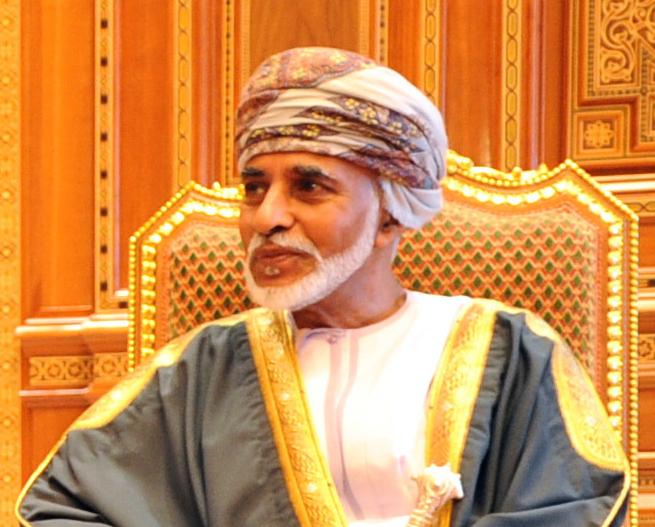
Sultan Qaboos bin Said of Oman


Photo credit: U.S. Department of State

When Sultan Qaboos bin Said of Oman died on January 10, 2020, at age 79 without an heir, a letter was opened that revealed his hand-picked successor. The transition of power to his cousin, Haitham bin Tariq, who has two sons and two daughters, was peaceful -- and so far, that peace has held. 


Sultan Qaboos lived as a homosexual, with elegant, somewhat effete young men (displaying Rolex watches and other luxury items) populating his palaces. He was also known to have a male English lover. Qaboos had been educated in England and even served in the British Army. Although everyone in the Middle East knew of his homosexual proclivities, the Sultan never came out.


With support from the British he seized power from his father in a 1970 coup to become an absolute monarch who ruled by royal decree. The press was muzzled, and all media was censored before publication or broadcast, so nothing of the sultan’s homosexual activity was ever revealed to the public. In Oman, homosexual acts were punishable by up to three years of imprisonment, and Qaboos did nothing to create a more progressive environment for gays. Even so, there is a dynamic underground gay scene in Oman, but the police turn a blind eye to it. So to this day, Turkey is the only predominantly Muslim country in the Middle East where homosexuality is not outlawed (no longer true - several alert readers have pointed this out -- see comment section). 


Yet Sultan Qaboos enjoyed a reputation as an “enlightened” despot. Quite naturally he received good press in England and at home, where even the “live” news broadcasts were pre-recorded for purposes of censorship. Not a single unflattering comment or photo was allowed to be made public.


The sultan presented an image of a Renaissance Man – he played the flute, built an opera house (above) and maintained a full symphony orchestra that included female musicians (although they wore hijabs); all 120 members are Omani nationals.


He was partial to the pipe organ and had a large German-built instrument installed in the opera house in 2011. One of the stops is labeled “Flûte Qaboos” in honor of his flute playing ability. 


Over the course of a 50-year reign, he ended Oman’s international isolation, raised standards of living, increased business development, abolished slavery, granted freedom of religion and quelled a rebellion. He paved roads, built an airport, schools and hospitals, established a telecommunications network and spread electrification throughout the country. These achievements are remarkable. For a brief three years (1976-79) Sultan Qaboos was married to his first cousin, who later remarried. Their union produced no heirs.

To celebrate the 30th anniversary of his rule, the sultan built this grand mosque, one of the largest in the Middle East.


Now that Sultan Qaboos is dead, there remains only one other Middle Eastern royal known to engage in homosexual activity, the bisexual Crown Prince Hamdan bin Mohammed al Maktum of neighboring Dubai. But that deserves a separate blog post. Stay tuned.

References:
San Cassimally
Wikipedia
Royal Foibles (blog)

Wednesday, March 18, 2020

George Platt Lynes


George Platt Lynes - self portrait 1940s


c. 1952

The American fashion and commercial photographer George Platt Lynes (1907-1955) discreetly produced a large body of homoerotic images that he kept for himself or distributed to a carefully selected circle of friends. For many years after his death, it was thought that he had destroyed all his prints and negatives of male nudes, but it turns out that most of them had found their way into the archives of the Kinsey Institute (Indiana), which now possesses the largest collection of male nudes by Lynes to be found anywhere. 


During the 1930s, Lynes was commissioned as a fashion photographer for magazines such as Vogue and Harper’s Bazaar. After relocating from NYC to Los Angeles, he became Hollywood’s acclaimed celebrity portraitist. During this time he was also pursuing a personal body of black and white photographs of male nudes and homoerotic images that he kept private, fearing they would harm his reputation and business in a homophobic society. While his earlier nudes depicted idealized youthful bodies, such as a young Yul Brynner, he moved towards a rougher and more sexualized aesthetic in his later work. As a pioneer in masculine erotic photography, George Platt Lynes also helped forge Dr. Alfred Kinsey’s research on homosexuality.


Bill Miller (1953) by George Platt Lynes

Lynes was born in 1907 in East Orange, New Jersey, but a life-changing event came with his relocation to Paris in 1925, a move meant to prepare him for college. While in Paris he forged friendships among the artistic elite and was never seen without his camera. Once again stateside, he opened a photographic studio in NYC and began a private series of photographs that interpreted characters and stories from Greek mythology, but it was portraiture that brought financial stability. Today he is best known for his portraits of artists such as W.H. Auden, Jean Cocteau, Colette, Aldous Huxley, Igor Stravinsky and Thomas Mann. After he moved to Hollywood in 1946, he photographed Katharine Hepburn, Rosalind Russell, Gloria Swanson, and Orson Welles. In 1948 he moved back to NYC, where he remained until his early death from lung cancer in 1955.


Gordon Hansen (1954)


Robert McVoy by George Platt Lynes