Role models of greatness.

Here you will discover the back stories of kings, titans of industry, stellar athletes, giants of the entertainment field, scientists, politicians, artists and heroes – all of them gay or bisexual men. If their lives can serve as role models to young men who have been bullied or taught to think less of themselves for their sexual orientation, all the better. The sexual orientation of those featured here did not stand in the way of their achievements.
Showing posts with label Musician. Show all posts

Thursday, March 21, 2024

Yannick Nézet-Séguin

(Updated since the original 2021 post) 

A native of Montreal, Canada, Yannick Nézet-Séguin (Yah-NEEK neh-ZAY Say-GAN, b. 1975, 48 years old) was the conducting coach for Bradley Cooper, who portrayed Leonard Bernstein in the 2023 movie MAESTRO. Yannick also recorded the movie's soundtrack. Your blogger is stunned that he could find the time, since he teaches conducting at the Curtis Institute and leads three orchestras and a world-famous opera company. His is a superstar conductor on the level of Gustavo Dudamel (also in his forties).

Here's a rundown. He was first named Music Director of The Philadelphia Orchestra in 2012, and subsequent contract extensions assure this position through the 2029-30 season. This makes him the first openly gay conductor of one of the "big five" orchestras in the United States, and on very sure footing indeed. 

In 2016 the Metropolitan Opera (NYC) announced that Nézet-Séguin would assume the title of Music Director beginning with the 2020-21 season, but following the termination of James Levine for sexual misconduct, he took the title two years early, beginning with the 2018-19 season.

Since 2000 Mr. Nézet-Séguin has also been Artistic Director and Principal Conductor of the Orchestre Métropolitain (Montreal), with whom he holds a lifetime contract.

He is a regular guest conductor of the Chamber Orchestra of Europe. He will appear this July with the COE as pianist and conductor in Baden-Baden, Germany. As well, he was  Music Director of the Rotterdam Philharmonic Orchestra from 2008-2018; today he holds the title of Ehredirigent (honorary conductor) of that organization (RPO).

 
Mr. Nézet-Séguin’s partner of two decades, Pierre Tourville (shown in sunglasses behind Yannick), is the assistant principal violist of the Orchestre Métropolitain (Montreal), and they appear everywhere together. When the conductor was fêted by the city of Philadelphia some years ago, Pierre Tourville was also introduced at every stop – amazing, considering the tortured history of gay conductors. After all, Leonard Bernstein (gay) had married a woman at the advice of famed conductor Dmitri Mitropoulos, and both those men led closeted lives.

In a New York Times profile by Daniel Wakin, it was reported that “Nézet-Séguin is what the orchestra world is desperate for: a young, charismatic maestro who can win the respect, even affection, of grizzled orchestra veterans, the enthusiasm of audiences and the praise of critics, which has for him been pretty exalted.”

The 48-year-old conductor’s relative youth is reflected in his flouting of certain traditions – he frequently leads from the podium in a business suit and tie (Carnegie Hall), and he’s partial to tight V-neck sweaters and skinny jeans. Many times he conducts without a baton, in the style of Mitropoulos. While on vacation in Tahiti he acquired a turtle tattoo on his right shoulder, and his compact five-foot-five frame bursts with energy.


Again from Mr. Wakin’s NYT profile: “He seemed stunned by the ovation” (conducting the Philadelphia Orchestra in Verdi’s Requiem at Carnegie Hall). “Applause from his inner circle greeted him in the crowded dressing room. Attendants broke open bottles of sparkling wine. Mr. Nézet-Séguin embraced his companion, Mr. Tourville, looked him in the eyes and said, ‘Oui?’

‘Oui,’ Mr. Tourville answered. With an air of coronation, orchestra and Carnegie Hall executives toasted Mr. Nézet-Séguin. “

The conductor’s honors include a prestigious Royal Philharmonic Society Award, Canada’s highly coveted National Arts Centre Award and the Prix Denise-Pelletier, the highest distinction for the arts in Quebec, awarded by the Quebec government.  In 2011, he received an honorary doctorate from the University of Quebec in Montreal and was appointed a Companion of the Order of Canada in 2012.

Even as he ages, Mr. Nézet-Séguin has not outgrown his overtly gay traits. He bleaches his hair blond, paints his nails, wears necklaces and bracelets and has pierced ears. Not to mention his shoulder tattoo. He listens to the music of Bad Bunny (an ally and of self-professed "fluid" sexuality) when he works out, and enjoys a penchant for jazz. Your blogger was pleased to learn that his favorite singer of all time was Sarah Vaughan, as is mine (when she died in 1990, my answering machine was full of condolences from sympathetic friends and colleagues).

Oh. Need I mention that orchestras and critics wax rhapsodic?

Official web site: https://yannicknezetseguin.com/en/

A recent photo by Mark Sommerfeld:


Thursday, May 18, 2023

Billy Strayhorn

Out & Gay in the Jazz World

Billy Strayhorn (1915-1967) attended high school in Pittsburgh, while studying classical music on the side. His trio played daily on a local radio station, and he wrote a musical for his high school. He also wrote "Chelsea Bridge", "Take the A-Train", "Lotus Blossum" and “Lush Life,” all of which have become jazz classics. 

He started composing both words and music for "Lush Life" at age 16, which became a prophetic anthem for his life. He did indeed get to Paris, become a socialite and suffer from alcoholism. That such a world-weary lyric could come from the pen of a teenager is astounding.

At 23 his life changed completely when he met Duke Ellington (above left), who was performing in Pittsburgh in 1938. Ellington was so impressed that he took him into his household, where he lived as part of the family. Ellington's nickname for Billy was "Sweet Pea." Strayhorn worked for Ellington for the next 29 years as an arranger, composer, pianist and collaborator until his early death from esophageal cancer, the result of a lifetime of cigarette use. As Ellington described him, “Billy Strayhorn was my right arm, my left arm, all the eyes in the back of my head, my brain waves in his head, and his in mine.”

Strayhorn was openly gay, but his association with Ellington helped protect him from discrimination. Until age 33 Strayhorn lived with his partner Aaron Bridgers, a jazz pianist and composer who moved to Paris in 1948. Until his death, Strayhorn then maintained a relationship with his subsequent partner, Bill Grove, who was Caucasian; however, they kept separate apartments, likely as the result of Strayhorn's higher profile and interracial prejudices of the day.

Strayhorn significantly influenced the career of Lena Horne, who recorded many of his songs. Strayhorn’s compositions are known for the bittersweet sentiment and classically infused harmonies that set him apart from Ellington.

Strayhorn to the rescue:

In a dispute over royalties in late 1940, ASCAP forbid its members from broadcasting any of their compositions over the radio. But Ellington, one of ASCAP’S most celebrated composers, needed radio broadcasts to promote record sales, which paid his orchestra’s salaries. Strayhorn rallied to save the day. During a hurried cross-country train ride to join Ellington in Los Angeles, Strayhorn (not an ASCAP member), got almost no sleep for six straight days, writing song after song after song. Strayhorn’s prolific, engaging new works kept the Ellington Orchestra afloat for months. When it was time for a new radio theme (Ellington’s own “Sepia Panorama” was still forbidden on the airwaves), Ellington chose Strayhorn’s “Take the A Train,” premiering it in early 1941. The rest is jazz history.

Queen Latifah (who lives in the Hollywood Hills with her partner Eboni Nichols) sings “Lush Life,” written when Strayhorn was a young, unseasoned song writer. Most performers say it’s difficult to sing and sounds like no other song in the standard repertoire.


Friday, January 7, 2022

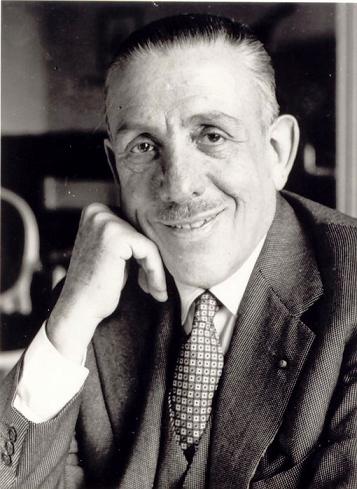
Composer Francis Poulenc

French composer Francis Poulenc, who engaged in a long string of homosexual relationships, was born January 7, 1899, into a wealthy Parisian family. In 1920 he became a member of a group of young composers dubbed “Les Six.” The others were Darius Milhaud, Arthur Honegger, Georges Auric, Germaine Tailleferre, and Louis Durey. Their music was a reaction against the music by the Impressionists (Debussy and Ravel) and late Romantics (Wagner, Puccini, etc.).

During the late 1920s Poulenc first acted on his homosexuality when he met painter Richard Chanlaire, who became his lover. Poulenc’s second lover, the bisexual Raymond Destouches, was a chauffeur and dedicatee of several of Poulenc’s compositions.
Musicologists suggested that Poulenc considered gay sex impure and thus had a difficult time with making homosexuality his identity.

The success of his 1924 ballet score for Diaghilev’s “Les biches” (The Deer) led to the commissions of his Concerto for Two Pianos* (1932) and the Organ Concerto (1938), both commissioned by fabulously wealthy lesbian American expatriate Winnaretta Singer, known as Princesse Edmond de Polignac. The organ concerto was premiered in the music salon of her private home, which housed a pipe organ. Famed organist Maurice Duruflé was the soloist.

Poulenc would later have a brief affair with a woman known as Frédérique and have a daughter by her in 1946. They did not marry. In a tour of the United States Poulenc met a friendly gay couple, Arthur Gold and Robert Fizdale, accomplished duo pianists who commissioned the Sonata for Two Pianos (1953). Poulenc found tours difficult, because they separated him from Lucien Roubert, his lover who died of pleurisy in 1955, just after Poulenc completed his masterpiece, the opera “Les dialogues des Carmélites.” In 1957 he met his last significant lover, Louis Gautier, who helped to revive his spirits. In that year, Poulenc produced his Flute Sonata (middle mvt. in YouTube excerpt below). 

Poulenc also composed a significant body of first-rate art songs, numbering more than 200; they remain staples of the genre.

"Hôtel" from a set of five songs "Banalités" (1940). Sung by Régine Crespin.


Leonard Bernstein commissioned Poulenc to write "Sept répons des ténèbres" (1961) for the opening of the Philharmonic Hall, hence known as Avery Fisher Hall, now David Geffen Hall (since 2015) at Lincoln Center, NYC. Shortly thereafter Poulenc died of a heart attack on January 30, 1963. One of the most honored composers of his time, he left an enduring legacy.


Sources:


Poulenc: A Biography by Roger Nichols

Poulenc: The Life in the Songs by Graham Johnson


*French conductor Georges Prêtre championed the works of Poulenc. I’ll never forget a performance in Paris (November 2004) of Poulenc’s Concerto for Two Pianos, selected by Prêtre to be performed on his 80th Birthday concert at the magnificently restored Art Deco masterpiece, the Théâtre des Champs-Elysées. Prêtre owns this piece. Here he conducts the Orchestra National de la RTF with the composer (piano on the left) and Jacques Février (piano on right) in the first movement of the concerto for two pianos.


Next: Poulenc at the piano with Jean-Pierre Rampal on flute (Rampal was the dedicatee). This middle movement of Poulenc's Flute Sonata (1957), marked Cantilena, is typical of his light, accessible style. This sonata has the honor of being the most often performed work in the entire repertoire of pieces written for flute and piano. Your blogger had the pleasure of rehearsing this sonata last evening (as accompanist). Pure pleasure.

Tuesday, November 23, 2021

Gary Burton

Jazz Musician: the undisputed king of vibes


Gary Burton (b. Jan. 23, 1943) is an American jazz vibraphonist. After many years of marriage Burton came out as a gay man in 1985, making him one of only a few openly gay jazz musicians. He chose a public means to declare his homosexuality, by coming out during an interview on National Public Radio's "Fresh Air" radio show with Terri Gross. That interview is frequently re-broadcast. Burton fathered two children from his marriage to Catherine Goldwyn, granddaughter of movie mogul Samuel Goldwyn (of Metro-Goldwyn-Mayer fame).

Burton is the undisputed master of the vibraphone, not just a vibes player, but THE vibes player whose rule spans from the 1960s to the present. Today he lives in South Florida, where he shares a newly built house with his partner, Jonathan Chong. They were married in 2013.

A true original on the vibraphone, Burton developed a pianistic style of four-mallet technique as an alternative to the usual two-mallet style. This approach caused Burton to be heralded as an innovator. His sound and technique are widely imitated. But have a look and listen. Here Gary Burton plays a vibes solo (performance dating from the 1960s): “Chega de Saudade” (No More Blues), composed by Antonio Carlos Jobim and Vinícius de Moraes. Do your best to ignore the dated fringed jacket and concentrate on his mind-blowing four mallet technique.


Saturday, December 7, 2019

Michael Tilson Thomas, American Conductor

UPDATE to the original post (9/7/2011):

MTT will be one of five recipients of a Kennedy Center Honors Award to be broadcast December 15, 2019 at 8pm on CBS.

Michael Tilson Thomas (b. 1944) is an American conductor, composer, and pianist – and a gay man. A California native, he has been music director of the San Francisco Symphony Orchestra since 1995, and beginning this evening he will lead the orchestra in the opening performances of the orchestra's 100th anniversary season.

Tilson Thomas is the first conductor to achieve prominence without concealing his homosexuality. For more than thirty years he has been partnered with Joshua Robison, who shares Tilson Thomas's  Edwardian house in San Francisco and a 1925 pink stucco palace in Miami. He has pushed audiences to rethink the relationship between classical music and homosexuality by celebrating gay composers and commissioning works that explore the experiences of gay men and lesbians.

After winning the 1968 Koussevitzky Prize at Tanglewood, Tilson Thomas became the youngest assistant conductor in the history of the Boston Symphony Orchestra, when he garnered great critical praise by conducting the second half of the symphony’s 1969 New York concert after its musical director became ill.

From that point on, Tilson Thomas steadily rose in the world of classical music, serving as conductor of a number of prestigious orchestras. In 1987 he founded the New World Symphony, an orchestra academy in Miami Beach, which moved into its permanent new home designed by Frank Gehry for an inaugural concert on January 26, 2011. The academy prepares gifted graduates of distinguished music programs for leadership positions in orchestras and ensembles around the world (www.nws.edu). Notably, four of them have been hired by the San Francisco Symphony. 

In 1988, Tilson Thomas became principal conductor of the London Symphony Orchestra, and in 1995 the music director of the San Francisco Symphony Orchestra. In June, 2000, he organized the American Mavericks music festival in San Francisco, highlighting the works of such gay composers as Lou Harrison, David Del Tredici and Meredith Monk.


In May 2001, Tilson Thomas conducted the premiere of Del Tredici’s “Gay Life,” a series of pieces he commissioned that explore the experiences of gay men in America, including the challenges that gay men have faced in their struggle to survive the AIDS epidemic. In addition, two of Tilson Thomas’ own compositions have added to the small but growing classical music repertoire focused on gay subjects. “Three Poems by Walt Whitman,” for baritone and orchestra, and “We Two Boys Together Clinging,” for baritone and piano, which use Whitman’s poetry to explore intimacy between men.

In February 25, 2010, President Obama presented Tilson Thomas with the National Medal of Arts, the nation’s highest award for artistic achievement.


Maestro Tilson Thomas narrates a history of the San Francisco Symphony. His commentary begins at the 1:36 mark in this video. Until I viewed this fascinating chronicle, I was unaware that the San Francisco Symphony was our nation's first professional orchestra to hire women to play instruments other than the harp.


Tilson Thomas embraced the YouTube genre in 2009 to help create the “YouTube Symphony Orchestra,” whose 96 members were selected from 30 countries based on more than 3,000 video auditions on YouTube. Here Tilson Thomas conducts gay composer Piotr Ilyich Tchaikovsky’s Finale from Symphony No. 4, leading the YouTube Symphony Orchestra on April 15, 2009 at Carnegie Hall.

Friday, January 25, 2019

Johann Rosenmüller


2019 is the 400th anniversary of the birth of Johann Rosenmüller (1619-1684), an important baroque composer of instrumental and sacred vocal music in Germany and Italy at the middle of the seventeenth century. He was an organist, trombonist, teacher and composer who survived a homosexual scandal in Leipzig and escaped to Italy, where he resurrected a major career in Venice.


After graduating from the University of Leipzig, he became the assistant to the Thomasschule Cantor (director of music). Working his way up, he was next appointed organist at the Nicolaikirche, one of the three important churches in the city. As his boss became increasingly ill, Rosenmüller was assured he would be next in line for the position of Cantor at the Thomasschule, the same position that Johann Sebastian Bach would assume seventy years later. In 1655, however, Rosenmüller was arrested on charges of seducing several of his choir boys; he subsequently escaped from jail and fled to Venice, where he supported himself by playing trombone at St. Mark’s Basilica.


Some years later, he attained a position as maestro di coro (master of the chorus), at the Ospedale della Pietà, an orphanage school that featured an acclaimed all-girl* choir and orchestra that performed liturgical functions and gave concerts on Sunday afternoons. A generation later Antonio Vivaldi famously directed the musical activities at this orphanage school, elevating the female choir and orchestra to world-wide fame, attracting many tourists. Today the Metropole Hotel is the former music building, and guides point out (erroneously) that the church to the left of the hotel was the church where Vivaldi’s girls performed. In fact, the church was built many years after Vivaldi’s death.


*Many of these girls were the illegitimate children of Venetian nobles, who lavishly supported the school. The girls performed behind screens so that their “comeliness would not distract those in attendance”. Your blogger surmises that a more plausible cause might have been to hide any physical resemblance of the orphans to their noble (actual) parents. Scandal!


Rosenmüller’s sacred compositions reflected an obvious Italian influence, and students who came from Germany to study with him took these works back to their homeland, thus introducing Italian musician idioms to Germany. In 1682, considering that the coast was clear after an interval of nearly 30 years, he left Italy and returned to his homeland, Germany, where he became court composer for a duke at Wolfenbüttel in Lower Saxony. He died there in 1684, at age 65. In the annals of classical music history, Rosenmüller is hardly a household word, but his name is frequently mentioned as the man who held two posts eventually filled by much more famous men, J. S. Bach and Antonio Vivaldi. Not to mention the well-documented homosexual scandal.

Sources:

Graeme Skinner: “Who's Who in Gay and Lesbian History from Antiquity to World War II”.

Robert A. Green, Professor at the School of Music, Northern Illinois University. GLBTQ Archive.

Wikipedia

Saturday, August 19, 2017

Dimitri Mitropoulos

Greek-born orchestra conductor Dimitri Mitropoulos (1896-1960) had a distinct style while on the podium – he didn’t use a baton, he conducted without a printed musical score in front of him, and he displayed an intense, vigorous physicality (later mimicked by Leonard Bernstein and Gustavo Dudamel – all three of them criticized for it).

Born into a deeply religious family, he trained to be a monk, but abandoned that plan when he learned that the church would not allow him to keep a musical instrument in his cell. His musical career rose to the very heights of his profession, most notably as principal conductor of the Minneapolis Symphony Orchestra for twelve years, followed by his appointment to the New York Philharmonic in 1950, a position regarded as the most prestigious in classical music in the United States. A talented pianist and composer in his youth, Mitropoulos championed difficult, complex newly-composed music, but it was during the time of his studies in Berlin that he redirected his focus from performing and composing to conducting.

But for all his international success and acclaim, he was victimized for his homosexuality.  During the time that Mitropoulos and Bernstein were having an affair in NYC, Mitropoulos advised the much-younger Bernstein to get married if he wanted to better his chances at leading a major symphony orchestra. Bernstein, a gay man, took his advice and married an actress – and went on to succeed Mitropoulos as conductor of the New York Philharmonic.

Photo below: Mitropoulos as both soloist and conductor with the Minneapolis Symphony.


At the height of his success as conductor of the New York Philharmonic, Mitropoulos became the subject of rumor and innuendo spawned by the open secret of his homosexuality, and he became a victim of McCarthy-era homophobia. He invariably dodged questions about his bachelor status by claiming "I married my art." Fear of being outed publicly forced Mitropoulos to sublimate his sexual desires, and he claimed that music making was a substitute for his “unlived sex life.”

Mitropoulos always lived modestly, even while being one of the highest paid conductors in the country; he gave away most of his money to assist struggling musicians and orchestras. He was sweet natured and kind, showing great professional respect for his orchestra members, but he was criticized for that, as well.

As support for Mitropoulos waned in NYC, the NY Philharmonic board looked for a replacement that would epitomize the masculine, heterosexual ideal. Ironically, they settled on Leonard Bernstein and named him co-conductor with Mitropoulos for the 1957-58 NY Philharmonic season. Bernstein took over as sole musical director in the fall of 1958. Although Mitropoulos bowed out gracefully, championing Bernstein’s talent, the loss of that job created a wound from which he never fully recovered. During the last years of his life Mitropoulos toured the world as guest conductor of major orchestras, but he succumbed to a third and fatal heart attack in late 1960 while rehearsing Mahler's Third Symphony with the La Scala Opera Orchestra in Milan. He was sixty-four years old.

Note: principal sources for this post are Linda Rapp and Geoffrey Bateman.

This video gives an up-close view of his “baton-less” conducting style – excerpts from a rehearsal and performance with the New York Philharmonic.

Third movement (Mephistopheles) of Franz Liszt’s A Faust Symphony:

Thursday, June 1, 2017

Kander and Ebb

After studying music composition at Oberlin and Columbia, John Kander (b. 1927), at left in photo, settled in New York City, where he worked as an arranger, accompanist, and conductor. He met lyricist Fred Ebb (1928-2004), at right, in 1963, and they formed a four-decade-long song writing team that produced such stage hits as Cabaret (1966) and Chicago (1975), both of which were made into award-winning films.

In 1965 Kander and Ebb joined forces with Harold Prince and George Abbott on a show called Flora, The Red Menace, which made a star out of nineteen-year-old Liza Minnelli, who won a Tony Award for her performance. In fact, Miss Minnelli and Chita Rivera went on to debut much of their material. The rest is Broadway history: The Happy Time/1968, Zorba/1968, 70, Girls, 70/1971, The Act/1977, Woman of the Year/1981, The Rink/1984, And the World Goes 'Round/1991, Kiss of the Spider Woman/1993, Steel Pier/1997 and The Visit/2001. Most of their collaborations were shows that explored the dark side of relationships, and few resulted in a happy ending.

Their contribution to the film score of Martin Scorsese's New York, New York/1977 yielded one of their most celebrated songs, sung by Liza Minelli in the film; however, it is Frank Sinatra’s cover that has become the most enduring interpretation.

Kander and Ebb – their two surnames were indivisible – it was impossible to say one without the other. Both were openly gay, and it was wrongly assumed by many that they were long-term lovers. In 2003, Kander, who has lived for nearly thirty years with Albert Stephenson (a choreographer and teacher) addressed those rumors in an interview in which he described the nature of his non-professional relations with Ebb as "his 40-year partner in creativity but never in domesticity, much less romance."

Marvin Hamlisch said of Kander and Ebb, "All I can remember is that working with Fred Ebb was a lot of fun. You know, John Kander and Fred Ebb wrote as a team. So, most of the songs that were written when we usually worked with Liza (Minnelli) were written by them. However, when it came to doing arrangements and working on Liza with a Z and putting things together, I loved working with Fred Ebb. We had the best time. He and I were really good friends. It was just delightful. He was a very, very smart man. And he was very funny. And he was very caustic. I think he probably wrote for her better than anyone in the world could have written for her. He just understood her so well."

After Ebb succumbed to a heart attack* in 2004, Kander continued working on the unfinished collaboration Curtains/2007, a murder mystery musical for which David Hyde Pierce won a Tony Award for best actor in a musical. Rupert Holmes supplied additional lyrics to complete the work. Alas, Curtains was not A-list Kander and Ebb. On a happy note, in 2010 John Kander wed his long-time partner, dancer and choreographer Albert Stephenson. Kander, who turns ninety this year, continues to work at his life-long profession. His most recent musical is The Landing/2013, with book and lyrics by Greg Pierce.

*Frank Ebb is buried at Green-Wood Cemetery in Brooklyn, New York, also the final resting place of Leonard Bernstein.

Update: July 28, 2014

John Kander was present at the White House to receive a prestigious award presented by President Obama, who spoke these words:


The 2013 National Medal of Arts (is given) to John Kander for his contributions as a composer. For more than half a century, Mr. Kander has enlivened Broadway, television and film through songs that evoke romanticism and wonder and capture moral dilemmas that persist across generations.

Friday, August 21, 2015

George Forrest & Robert Wright

Robert Wright (1914-2005) and George Forrest (1915-1999, b. George Forrest Chichester, Jr.) were professional and life partners for over seventy years. They worked as a team writing music and lyrics for film, stage and club acts. While both men were credited equally as composer-lyricists, it was George who worked chiefly with the music. Although their specialty was providing lyrics for melodies from classical compositions, their output also included much original musical material, such as their score for Grand Hotel (1989). They worked exclusively with each other throughout their careers, and the peak of their creative output was during the late 1930s while under contract with M-G-M.

However, Wright and Forrest were best known for the 1953 Broadway musical and 1955 musical film Kismet, for which they had adapted musical themes by Alexander Borodin. Enduring songs from that show include Baubles, Bangles and Beads, Stranger In Paradise and And This Is My Beloved. The pair won a Tony award for their work on Kismet, and in 1995 they were awarded the ASCAP Foundation Richard Rodgers Award. They also received three Academy Award nominations for Best Song.

Wright and Forrest provided scores for dozens of films, chief among them After the Thin Man (1936), Boystown (1938), Marie Antoinette (1938), Our Gang Follies (1938), The Women (1939), I Married an Angel (1941) and Song of Norway (1970, adapting the music of Edvard Grieg). They wrote the hit song The Donkey Serenade (based on a musical theme by Rudolf Friml) along with composer Herbert Stothart. In total they worked together on over 50 films, 18 stage productions, and 13 TV specials, writing 2,000 songs during the course of their careers.

The two men met as Miami High School classmates in 1929. While still a teenager Wright was working as a pianist accompanying silent films, and he conducted his own high school orchestra. He met fourteen-year-old Forrest when George auditioned for the school’s glee club, and the two soon became lovers. They later auditioned as a pair for M-G-M in the mid-1930s and moved to Hollywood for the duration of their contract, which lasted until 1942.

The Wright and Forrest relationship represents the longest-running songwriting collaboration in the history of American show business.

Alfie Boe, who starred in a 2007 revival of Kismet, sings Stranger in Paradise. For those impatient types, the music starts at the 0:45 timing mark:

Tuesday, January 13, 2015

Pianist Earl Wild

Earl Wild was one of the greatest virtouso pianists of the 20th century, often compared to Horowitz and Rachmaninov. Openly gay, Wild lived in Palm Springs, California, and Columbus, Ohio, with his domestic partner of 38 years, Michael Rolland Davis. Wild had an outsized talent and played flamboyantly. He specialized in piano transcriptions, performing the music of Lizst and Rachmaninov, but also arranged and composed extensively. In a nod to a fellow gay man, his Piano Sonata (2000) features a 4-minute toccata dedicated to Ricky Martin. Wild’s landmark piano fantasy on themes from Gershwin’s opera,  “Porgy and Bess,” was followed by his own solo piano settings of Rachmaninov and Gershwin songs. Wild lived to the ripe old age of 94. He died at home on January 23, 2010, of congestive heart disease.

Wild  was the first pianist to give a recital on television, in 1939. Nearly sixty years later, in 1997, he gave the first piano recital to be streamed live over the Internet. Over the course of his career, Wild played at the White House, gave annual recitals at Carnegie Hall (always sold out within minutes) and remained active until his final recitals and recordings in 2005.

Wild was also known as a formidable wit and saucy raconteur. When he was interviewed by David Dubal, Mr. Wild was asked about his years of playing flute in the United States Navy Band during World War II (Wild was stationed at a base outside Washington, DC). “Did you see any action?” Mr. Dubal asked. “Only in the cemetery,” Mr. Wild deadpanned.

Wild’s piano arrangement of “Mexican Hat Dance,” recorded at the age of 88! Guaranteed to put a smile on your face.


Earl Wild: Etude on Embraceable You (Gershwin)
Performed by Yeol-Eum Son
Wild’s Etudes on Gershwin’s popular songs are becoming staples of concert repertoire, especially as encores. I never thought it possible, but I think this performance actually surpasses Wild’s own interpretation.


Sunday, May 18, 2014

Andy Bey

Jazz pianist and vocalist

Andy Bey is an openly gay jazz pianist and vocalist. Born in 1939 in Newark, NJ, at the age of 17 he and his siblings formed a trio called Andy and the Bey Sisters. They performed together in Europe and across the country for eleven years, recording three albums before splitting up in 1967. During the 1970s he worked with Dee Dee Bridgewater and drummer Max Roach.

Twenty years ago (1994) Bey was diagnosed as HIV-positive but has continued his career while maintaining a regimen that includes yoga and a vegetarian diet; at the time of this writing he is 74 years old and counting. Herb Jordan assisted Bey with restarting his recording career. Their album, Ballads, Blues, & Bey (1996), helped return Bey to prominence. He also  collaborated with Fred Hersch, another openly gay HIV-positive working jazz musician.

Andy Bey received the "2003 Jazz Vocalist of the Year" award by the Jazz Journalists Association. He has released four albums within the last ten years and has a reputation as a consummate ballad singer, specializing in jazz standards.

Never Let Me Go (written in 1956 by Jay Livingston and Ray Evans)

Thursday, April 3, 2014

Saxophonist Dave Koz

Out in the World of Jazz


In a 2004 interview in “The Advocate” magazine, Koz came out publicly as a gay man at age 40. Initially wary of the impact coming out would have on his story-book career, he sold more records and concert tickets than ever and has never looked back. He has become a generous and hard working advocate for gay issues.

A virtual polymath, in addition to being an award-winning saxophonist, Dave Koz is a vintner, jazz cruise host, radio personality, TV host, founder of Rendezvous Records and global ambassador for the Starlight Children’s Foundation. He was a featured performer at Bill Clinton’s presidential inauguration.

Koz was named by “People” magazine as one of their “50 Hottest Bachelors” in their June, 2004 issue (Dave’s response: “You know, I didn’t get one date out of that thing. The biggest gyp in the world!”). In 2009 Koz received a star on the Hollywood Walk of Fame.

In this video Dave interviews Marilyn and Alan Bergman, a song writing team for 50 years, who wrote "The Way We Were," featured on Dave’s album “At the Movies.” He invited Vanessa Williams to perform this classic movie song on his award-winning album.


From a live concert in Tel Aviv, Israel, openly gay (and model handsome) jazz saxophonist Dave Koz plays “Over the Rainbow.” There is a long spoken introduction, so jump ahead to where the music begins at the 1:38 mark.


Dave hosts Jazz Cruises that include the likes of Chris Botti, David Benoit and Jeffrey Osborne. To learn more about them, click on this link
www.davekozcruise.com

Monday, March 3, 2014

John Ireland

John Ireland (1879-1962) was an English composer, organist and teacher whose music is “easy on the ears,” in contrast to most of the arresting music written after the Edwardian era; Ireland’s feet remained firmly planted in the nineteenth century (with a few seconds and sixths thrown in for spice). Even so, he was a teacher of composition at the Royal College of Music in London, where his most famous pupil was Benjamin Britten. Ireland is known chiefly for his piano miniatures and songs influenced by nature, although his organ compositions, violin sonatas and piano concerto are a major part of his musical works still performed today. It was the premiere of his second violin sonata in 1918 that brought him overnight recognition as a composer. Portrait at left, circa 1922.

Even though he held important posts as a church organist and choirmaster, Ireland was troubled by his uneasy relationship with Anglo-Catholic beliefs and traditions. In 1936 he wrote, “I am a Pagan. A Pagan I was born and a Pagan I shall ever remain. That is the foundation of religion.”

Ireland was a severely closeted homosexual who was crippled by pressure to live a life of social normalcy. This strategy culminated in a brief, but disastrous and unconsummated marriage that led to his public humiliation. According to Byron Adams (Gay Histories and Cultures, Volume 2), Ireland’s personal life was one of “relentless gloom.” Although Ireland enjoyed passionate homoerotic attachments to male friends and his young choirboys, social pressures against such relationships led him deeper into depression and alcoholism. Because his sexual inclinations led to alienation, he did not mix in homosexual circles, and he never found a long-term or stable sexual partner.

Ireland virtually stopped composing after World War II and spent his last years suffering from illness, blindness and profound melancholy.

His music is uncomplicated and lands comfortably on the untrained ear. Give this a try:

Piano Concerto in E-flat (1930): First movement