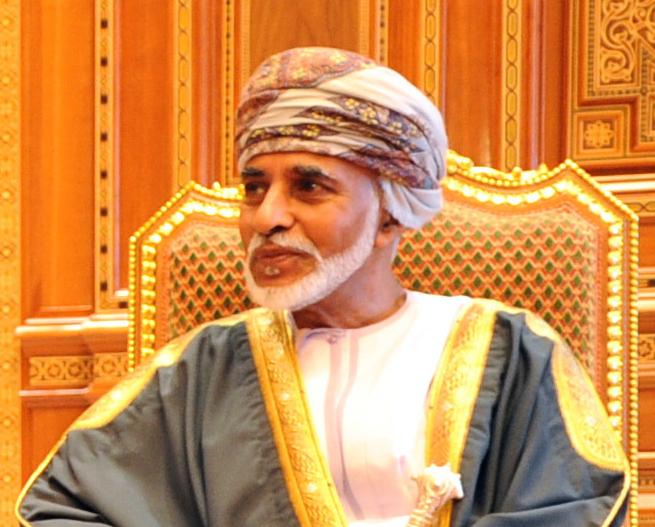
Photo credit: U.S. Department of State
When Sultan Qaboos bin Said of Oman died on January 10, 2020, at
age 79 without an heir, a letter was opened that revealed his hand-picked successor.
The transition of power to his cousin, Haitham bin Tariq, who has two sons and
two daughters, was peaceful -- and so far, that peace has held.
Sultan Qaboos lived as a homosexual, with elegant, somewhat
effete young men (displaying Rolex watches and other luxury items) populating
his palaces. He was also known to have a male English lover. Qaboos had been
educated in England and even served in the British Army. Although everyone in
the Middle East knew of his homosexual proclivities, the Sultan never came out.
With support from the British he seized power from his father in a
1970 coup to become an absolute monarch who ruled by royal decree. The press
was muzzled, and all media was censored before publication or broadcast, so
nothing of the sultan’s homosexual activity was ever revealed to the public. In
Oman, homosexual acts were punishable by up to three years of imprisonment, and
Qaboos did nothing to create a more progressive environment for gays. Even so, there is
a dynamic underground gay scene in Oman, but the police turn a blind eye to it. So to
this day, Turkey is the only predominantly Muslim country in the Middle East
where homosexuality is not outlawed (no longer true - several alert readers have pointed this out -- see comment section).
Yet Sultan Qaboos enjoyed a reputation as an “enlightened” despot.
Quite naturally he received good press in England and at home, where even the “live”
news broadcasts were pre-recorded for purposes of censorship. Not a single
unflattering comment or photo was allowed to be made public.

The sultan presented an image of a Renaissance Man – he played the flute, built an opera house (above) and maintained a full symphony orchestra that included female musicians (although they wore hijabs); all 120 members are Omani nationals.

He was partial to the pipe organ and had a large German-built instrument installed in the opera house in 2011. One of the stops is labeled “Flûte Qaboos” in honor of his flute playing ability.

Over the course of a 50-year reign, he ended Oman’s international isolation,
raised standards of living, increased business development, abolished slavery,
granted freedom of religion and quelled a rebellion. He paved roads, built an
airport, schools and hospitals, established a telecommunications network and
spread electrification throughout the country. These achievements are remarkable. For a brief three years
(1976-79) Sultan Qaboos was married to his first cousin, who later remarried.
Their union produced no heirs.
To celebrate the 30th anniversary of his rule, the sultan built this grand mosque, one of the largest in the Middle East.

Now that Sultan Qaboos is dead, there remains only one other Middle Eastern royal known to engage in homosexual activity, the bisexual Crown Prince Hamdan bin Mohammed al Maktum of neighboring Dubai. But that deserves a separate blog post. Stay tuned.
References:
San Cassimally
Wikipedia
Royal Foibles (blog)

